• If your have CLUB EVENTS/RIDE & would like to announce it here,
    Message traxxas-modifier about it :-)

Daily Devotion

boldstardex

Moderator
Staff member
The Meaning of a Name
December 1, 2015


Read: Matthew 1:18-25 | Bible in a Year: Ezekiel 40–41; 2 Peter 3


You are to give him the name Jesus.

Matthew 1:21


According to a New York Times article, children in many African countries are often named after a famous visitor, special event, or circumstance that was meaningful to the parents. When doctors told the parents of one child that they could not cure the infant’s illness and only God knew if he would live, the parents named their child Godknows. Another man said he was named Enough, because his mother had 13 children and he was the last one! There’s a reason for everyone’s name, and in some cases it also conveys a special meaning.

Before Jesus was born, an angel of the Lord told Joseph, “[Mary] will give birth to a son, and you are to give him the name Jesus, because he will save his people from their sins” (Matt. 1:21). Jesus is the Greek form of Joshua, which means “the Lord saves.” In that day and culture, many children would have been named Jesus, but only one came into this world to die so that all who receive Him might live eternally, forgiven and freed from the power of sin.

In Jesus we see God's loving purpose & boundless #grace.
Charles Wesley wrote these words we often sing as Christmas nears: “Come, Thou long-expected Jesus, born to set Thy people free; from our fears and sins release us; let us find our rest in Thee.”

Jesus came to turn our darkness into light, to transform our despair into hope, and to save us from our sins.

Heavenly Father, in Jesus we see Your loving purpose and boundless grace. We humbly acknowledge Your Son as the One who came to save us from our sins.

Jesus’ name and mission are the same—He came to save us.

INSIGHT:
Joseph is a popular biblical name. The first Joseph in the Bible is Jacob’s son who, after being sold into slavery by his brothers, rose to great influence in Egypt (Gen. 37–50). Two other Josephs are mentioned in the Old Testament period: a musician (1 Chron. 25:2, 9) and one in the lineage of Christ (see Luke 3:24, 30). In the New Testament we begin with the earthly father of Jesus (Luke 2; Matt. 1). Next is Joseph of Arimathea, who assisted in Jesus’ burial (Matt. 27:57). Finally, we read of Joseph Barsabbas (Acts 1:23), who was considered to fill Judas’ vacated apostolic office; and Joseph the encourager, better known as Barnabas (Acts 4:36).
 

boldstardex

Moderator
Staff member
When Not to Rejoice
December 3, 2015


Read: Ezekiel 25:1-7; Matthew 5:43-48 | Bible in a Year: Ezekiel 45–46; 1 John 2

Do not gloat when your enemy falls.

Proverbs 24:17


The Akan people of Ghana have a proverb: “The lizard is not as mad with the boys who threw stones at it as with the boys who stood by and rejoiced over its fate!” Rejoicing at someone’s downfall is like participating in the cause of that downfall or even wishing more evil on the person.

That was the attitude of the Ammonites who maliciously rejoiced when the temple in Jerusalem “was desecrated and over the land of Israel when it was laid waste and over the people of Judah when they went into exile” (Ezek. 25:3). For spitefully celebrating Israel’s misfortunes, the Ammonites experienced God’s displeasure, which resulted in grim consequences (vv. 4-7).

How do we react when disaster befalls our neighbor or when our neighbor gets into trouble? If she is a nice and friendly neighbor, then, of course, we will sympathize with her and go to her aid. But what if he is an unfriendly, trouble-making neighbor? Our natural tendency may be to ignore him or even secretly rejoice at his downfall.

Proverbs warns us: “Do not gloat when your enemy falls; when they stumble, do not let your heart rejoice” (24:17). Instead, Jesus tells us that we show His love in action when we “love [our] enemies and pray for those who persecute [us]” (Matt. 5:44). By so doing, we imitate the perfect love of our Lord (5:48).

Lord, open my eyes and my heart to be honest about my attitude toward those who are unkind or unfair to me. Fill my heart with Your love, Lord, and help me pray for them.

Love your neighbor as yourself.
 

boldstardex

Moderator
Staff member
Worry-Free
December 4, 2015


Read: Psalm 37:1-9 | Bible in a Year: Ezekiel 47–48; 1 John 3

Do not fret because of those who are evil.

Psalm 37:1


Trying to stay aware of current events has its downside because bad news sells better than good news. It’s easy to become overly concerned about the criminal acts of individuals, crowds, or governments over whom we have no control.

Psalm 37 gives perspective to the daily news. David begins by saying, “Do not fret because of those who are evil” (v. 1). Then he proceeds to outline for us some alternatives to becoming overly anxious. In essence, David suggests a better way of thinking about negative news in our world.

What would happen if, instead of worrying about events beyond our control, we chose to trust in the Lord? (v. 3). Wouldn’t we be better off to “take delight in theLord” (v. 4) rather than fret without limits? Imagine the freedom from worry we could have if we would “commit [our] way to the Lord” (v. 5). And how calm we could be by learning to “be still before the Lord and wait patiently for him”! (v. 7).

News of trouble we cannot change offers us an opportunity to set boundaries for our concerns. As we trust God, commit our ways to Him, and rest in Him, our outlook brightens. The struggles and trials may not disappear, but we will discover that He gives us His peace in the midst of them.

Lord, we see danger and trouble all around us. Help us not to worry but instead to trust and rest in You. Show us the peace that comes from waiting patiently on You.

Obstacles give us the opportunity to trust God.

INSIGHT:
The invitation of Psalm 37 is not simply to lay down our anxiety but to replace it with something far better—trust and delight in the Lord (vv. 3-4). Replacing worry with trust is also a concern of the apostle Paul when he tells the Christians in Philippi, “Do not be anxious about anything, but in every situation, by prayer and petition, with thanksgiving, present your requests to God. And the peace of God, which transcends all understanding, will guard your hearts and your minds in Christ Jesus” (Phil. 4:6-7).
 

boldstardex

Moderator
Staff member
"...[Jesus] humbled Himself by becoming obedient to the point of death, even death on a cross...God highly exalted Him, and bestowed on Him the name which is above every name..." -Philippians 2:8-9

JESUS BORN IN A STABLE – A FAIRY TALE?
December 4, 2015

A few years ago, a famous designer by the name of Versace was murdered in Miami. Andrea Lee was quoted as having asked Versace earlier if he believed in God, and this is what he said: “Yes, I believe in God, but I’m not the kind of religious person who goes to church, who believes in the fairy tale of Jesus born in the stable with the donkey. That? No, I’m not that stupid. I can’t believe in that God with all the power that He has, would have Himself born in a stable. It would have been too uncomfortable.”

Here was a hero of contemporary culture who said he believed in God, but didn’t need all that “Jesus” stuff. But the wonder of the Christmas story is that God, with all His power, humbled Himself to become a man and, even more, to die for us – to be our Savior. There was certainly no degree of comfort in that. God did this because He loves you and me, and that’s a God worth believing.
 

boldstardex

Moderator
Staff member
A Faithful Servant
December 7, 2015


Read: Joshua 14:6-15 | Bible in a Year: Daniel 5–7; 2 John
If anyone serves, they should do so with the strength God provides, so that in all things God may be praised through Jesus Christ.

1 Peter 4:11


Madaleno is a bricklayer. From Monday to Thursday he builds walls and repairs roofs. He is quiet, reliable, and hardworking. Then from Friday to Sunday he goes up to the mountains to teach the Word of God. Madaleno speaks Nahuatl (a Mexican dialect), so he can easily communicate the good news of Jesus to the people in that region. At age 70, he still works with his hands building houses, but he also works to build the family of God.

His life has been threatened several times. He has slept under the stars and faced death from car accidents and falls. He has been kicked out of towns. But he thinks that God has called him to do what he does, and he serves happily. Believing that people need to know the Lord, he relies on God for the strength he needs.

Relying on God's #strength allows us to serve him better.
Madaleno’s faithfulness reminds me of the faithfulness of Caleb and Joshua, two of the men Moses sent to explore the Promised Land and report back to the Israelites (Num. 13; Josh. 14:6-13). Their companions were afraid of the people who lived there, but Caleb and Joshua trusted in God and believed He would help them conquer the land.

The work entrusted to us may be different than Madaleno’s or Caleb’s and Joshua’s. But our confidence can be the same. In reaching out to others, we rely not on ourselves but on the strength of our God.

Where has God placed you to serve? Are you being faithful?

We grow strong when we serve the Lord.

INSIGHT:
Discipleship has been called “a long obedience in the same direction.” The point is not how much we have done, but whether or not we have been faithful to our Lord. Caleb was faithful for 45 years in the wilderness. When Christ returns, our faithfulness will be rewarded when we hear Him say, “Well done, good and faithful servant” (Matt. 25:21).
 

boldstardex

Moderator
Staff member
The Perfect Gift
December 8, 2015


Read: Romans 12:1-8 | Bible in a Year: Daniel 8–10; 3 John

Ascribe to the Lord the glory due his name; bring an offering and come into his courts.

Psalm 96:8


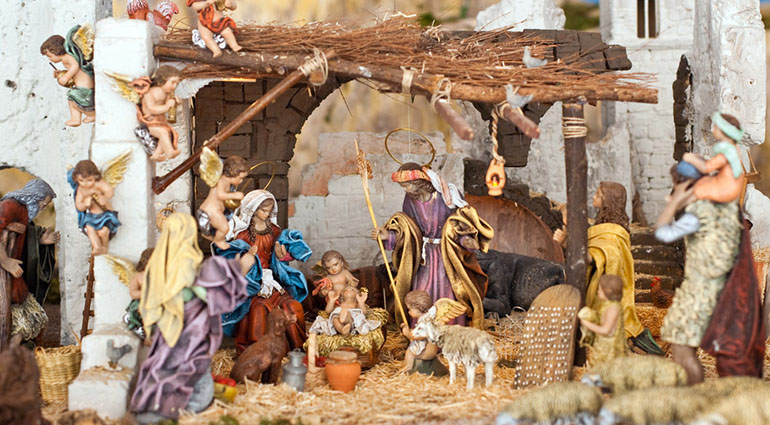
Every year our local botanical garden hosts a celebration of Christmas around the world. My favorite display is a French nativity. Instead of the traditional scene showing shepherds and wise men with gifts of gold, frankincense, and myrrh gathered around the manger, it shows French villagers bringing their gifts to baby Jesus. They bring bread, wine, cheese, flowers, and other items that God has given them the ability to produce. This reminds me of the Old Testament command to bring the firstfruits of our labor to the house of the Lord (Ex. 23:16-19). This depiction of the nativity illustrates that everything we have comes from God, so the only thing we have to give is something that God has given us.

When Paul instructed the Romans to present themselves as a living sacrifice, he was telling them to give back to God what God had given them—their own selves (Rom. 12:1). This includes the gifts He gave them, even their ability to earn a living. We know that God gives people special abilities. Some, like David, were skilled in music (1 Sam. 16:18). Some, like Bezalel and Oholiab, were skilled in artistic works (Ex. 35:30-35). Others have skill in writing, teaching, gardening, and many other things.

When we give back to God what He has first given to us, we give Him the perfect gift—ourselves.

What can you offer to Jesus?

Share on our Facebook page: facebook.com/ourdailybread

Give your all to Christ who gave His all for you.

INSIGHT:
There are five listings of spiritual gifts in the New Testament: Romans 12:6-8; 1 Corinthians 12:8-10; 12:28-30; Ephesians 4:11; and 1 Peter 4:11. In each of these lists the emphasis is not on the different types of gifts but on their diversity and how they are to be used in a way that promotes love and unity in the church (1 Cor. 12:12–13:13). Gifts are to be used to build up the spiritual maturity of the believers (Eph. 4:12-16) and to bring glory to the Lord (1 Peter 4:9-11). In Romans 12 Paul encourages believers to use their gifts in humility (v. 3), in unity (vv. 4-5), and with sincere love and respect (vv. 9-10).
 

boldstardex

Moderator
Staff member
Just the Ticket
December 9, 2015


Read: Ephesians 1:1-10 | Bible in a Year: Daniel 11–12; Jude


In him we have . . . the forgiveness of sins, in accordance with the riches of God’s grace.

Ephesians 1:7


When a police officer stopped a woman because her young daughter was riding in a car without the required booster seat, he could have written her a ticket for a traffic violation. Instead, he asked the mother and daughter to meet him at a nearby store where he personally paid for the needed car seat. The mother was going through a difficult time and could not afford to buy a seat.

Although the woman should have received a fine for her misdemeanor, she walked away with a gift instead. Anyone who knows Christ has experienced something similar. All of us deserve a penalty for breaking God’s laws (Eccl. 7:20). Yet, because of Jesus, we experience undeserved favor from God. This favor excuses us from the ultimate consequence for our sin, which is death and eternal separation from God (Rom. 6:23). “In [Jesus] we have . . . the forgiveness of sins, in accordance with the riches of God’s grace” (Eph. 1:7).

Never stop thanking God for His amazing grace.
Some refer to grace as “love in action.” When the young mother experienced this, she later remarked, “I will be forever grateful! . . . And as soon as I can afford it I will be paying it forward.” This grateful and big-hearted response to the officer’s gift is an inspiring example for those of us who have received the gift of God’s grace!

Dear Father, thank You for giving us what we don’t deserve. You have forgiven my sins and provided a way for me to be reconciled to You through the gift of Your Son. Help me to always be grateful for Your grace.

God’s gift is grace.

INSIGHT:
The city of Ephesus was “the capital of . . . the western part of Asia Minor. It was colonized principally from Athens. In the time of the Romans it bore the title of ‘the first and greatest metropolis of Asia.’ It was distinguished for the Temple of Diana, who there had her chief shrine; and for its theatre, which was the largest in the world, capable of containing 50,000 spectators. It was, like all ancient theatres, open to the sky. Here were exhibited the fights of wild beasts and of men with beasts (1 Cor. 4:9; 9:24, 25; 15:32). Many Jews took up their residence in this city, and here the seeds of the gospel were sown immediately after Pentecost (Acts 2:9; 6:9).”
 

boldstardex

Moderator
Staff member
Like Shooting a Fly
December 10, 2015


Read: 2 Corinthians 4:1-6 | Bible in a Year: Hosea 1–4; Revelation 1

Christ’s love compels us, because we are convinced that one died for all, and therefore all died.

2 Corinthians 5:14


Macarena Valdes’s skill in mapping underground mines made a real difference in the rescue of the 33 Chilean miners trapped after an explosion in October 2010. Drilling to find the exact place where the men were located was like “trying to shoot a fly from 700 meters away,” she said. With her mining experience, Valdes was able to guide the probe to where the miners were entombed, which helped bring about their dramatic rescue.

In efforts to carry out spiritual rescues, it’s easy to become discouraged. Although the apostle Paul faced even greater obstacles, he said, “We do not lose heart” (2 Cor. 4:1). Even though “the god of this age” had “blinded the minds of unbelievers, so that they cannot see the light of the gospel,” he continued to proclaim the gospel of salvation (vv. 4-5). Compelled by God, who lovingly spoke light into his own darkness (v.6), Paul knew that what God had done for him God could do for others.

You and I may have a similar story. Compelled by the love of God, we too have reason not to lose heart. As Macarena led in the rescue of the miners, the Spirit of God can carry the light of our love and words into the hearts of those who need a rescue they may not yet understand.

Lord Jesus, thank You for coming to our rescue when we were lost and helpless in our sin. Help those of us who have been rescued to share the lifeline of Your love with those who are still trapped.

When you’ve been rescued, you want to rescue others.

INSIGHT:
In the middle of Paul’s discussion with the Corinthian church about sharing the message of the gospel, he makes two references to creation. In verse 4 of today’s reading, Paul refers to Christ as the image of God—language that is similar to the description of the creation of humanity (Gen. 1:26). Then in verse 6, Paul refers to the creation of light (see Gen. 1:3) as similar to the effect of salvation. In both cases—the creation of light and our new redeemed life—God created something new (2 Cor. 5:17) and both are “very good” (Gen 1:31).
 

boldstardex

Moderator
Staff member
Paradogs
December 11, 2015


Read: Psalm 143:7-12 | Bible in a Year: Hosea 5–8; Revelation 2
http://odb.org/wp-content/themes/odbm-base/assets/download.php?file=http://dzxuyknqkmi1e.cloudfront.net/odb/2015/12/odb-12-11-15.mp3
In You do I trust; cause me to know the way in which I should walk.

Psalm 143:8


I am amazed by the story of the World War II paradogs. In preparing for D-Day (June 6, 1944), the Allied troops needed the sharp senses of dogs to sniff their way through minefields and to warn troops of approaching danger. And the only way to get these dogs to troops behind enemy lines was by parachute. But dogs are instinctively afraid of doing this—and let’s be honest, they are not alone. Yet after weeks of training, the dogs learned to trust their masters enough to jump at their command.

I wonder if any of us trust our Master enough to do challenging things we would never instinctively do or things that might make us fearful. We may not be instinctively generous or forgiving or patient with those who annoy us. Yet Jesus commands us to trust Him enough to do things that may be difficult but that will advance His kingdom. To say, “In You do I trust; cause me to know the way in which I should walk” (Ps. 143:8 nkjv).

Trust God to lead you and walk with you.
Paradogs often received medals for their bravery. I believe we too will someday hear “well done” because we have trusted our Master enough to jump when He said, “Go!”

Is God asking you to do something that you are afraid to do? Will you trust Him to lead you and walk with you?

Trust Jesus to show you how you can be used by Him.

INSIGHT:
Psalm 143 is the last of seven penitential psalms (Pss. 6, 32, 38, 51, 102, 130) that express deep sorrow over sin. The authors affirm that as forgiven people they have come into God’s presence because of His mercy. Today’s psalm is a prayer for deliverance, protection, and guidance. David, pursued and in grave danger from a powerful enemy (vv. 3-4), desperately cried out to the Lord (v. 7). He likely wrote this psalm when fleeing from the murderous Saul. He prayed for God’s mercy (v. 1), rescue (v. 9), guidance (v. 10), preservation (v. 11), and deliverance (v. 12). His prayer is not based on his own merits (v. 2) but on trust in God’s mercy, faithfulness, righteousness, and unfailing love.
 

boldstardex

Moderator
Staff member
“…you shall call his name Jesus, for it is He who will save His people from their sins.” - Matthew 1:21

THE ULTIMATE BIRTH ANNOUNCEMENT
December 16, 2015

One type of letter we get often in our household is a birth announcement—someone announcing the birth of a new child in their home. It’s a wonderful time of celebration and excitement. But do you know that, when Jesus Christ was born, the ultimate birth announcement—straight from heaven—occurred when God, through His angels, said, “Today in the city of David has been born for you a Savior who is Christ the Lord.”

You may ask, “Why do I need a Savior?”

Well, God’s Word is clear that we need a Savior because all of us sin and, in the process, find ourselves separated from God. If we die separated from Him, that means hell, and that’s bad news. But Christmas is about good news, because Christ came to pay the penalty for our sins so that we could be forgiven and made right with God. For those who believe, He saves us from sin and ultimately, hell—and that’s pretty important.

So as you rush around getting ready for Christmas, remember why He came, and believe it. That’s the key to having a merry Christmas.
 

boldstardex

Moderator
Staff member
"The light shines in the darkness, and the darkness did not comprehend it." - John 1:5

THE LIGHT OF JESUS
December 24, 2015

The candle lighting service is a beautiful moment of our church’s Christmas Eve celebration. When all the lights are out in the Sanctuary, we light a single candle, and that one candle overcomes all the darkness of the entire room. It’s a wonderful demonstration of this fact – darkness cannot overpower light. Well, it’s the same with spiritual darkness and spiritual light of Jesus Christ. His Light will overpower the darkness.

There have been times in history where it seemed like the spiritual darkness was overpowering the spiritual light. For instance, in the 20th century, Marxism had great momentum. The Soviet revolution, then the Communist revolution in China, then Cuba, Eastern Europe, and Southeast Asia soon tumbled after. It seemed like that darkness of atheism was overpowering the light within the church. But by the end of the 20th century, the Soviet Union was no more. Eastern Europe became the birthplace of many fledgling democracies. And not only that, do you realize that the third largest number of Christians in any country in the world is in communist China? Even though it sometimes seems darkness wins for a time, it never permanently overpowers the Light.

Of course the greatest example of that is the cross. For a moment, it appeared that the devil had won. But two days later, the light was turned on, never to be snuffed out again. For in the end, the Light of Jesus always overpowers the darkness.
 

boldstardex

Moderator
Staff member
You Have Value
January 11, 2016


Read: Romans 5:6–11 | Bible in a Year: Genesis 27–28; Matthew 8:18-3

You were bought at a price. 1 Corinthians 6:20

After my mother-in-law died, my wife and I discovered a cache of US Indian Head pennies in a dresser drawer in her apartment. She wasn’t a coin collector, as such, but she lived in the era when these pennies were in circulation and she had accumulated a few.

Some of these coins are in excellent condition; others are not. They are so worn and tarnished you can hardly see the imprint. All bear the stamp “One Cent” on the opposite side. Although a penny these days has little value and many consider them useless, this one-cent coin would have bought a newspaper in its day. And collectors still find value in them, even those that have been battered and abused.

Perhaps you feel tarnished, worn, old, or out of circulation. Even so, God finds value in you. The Creator of the universe wants you—not for your mind, your body, your clothes, your achievements, your intellect, or your personality, but because you are you! He would go any distance and pay any price to possess you (1 Cor. 6:20).

In fact He did. He came down to earth from heaven and purchased you with His own blood (Rom. 5:6, 8-9). That’s how much He wants you. You are valuable in His eyes, and He loves you.

As I think about Your love for me, Father, I wonder with amazement how You could love someone like me—and I praise You.

Christ’s death is the measure of God’s love for you.

INSIGHT:
The word gospel means “good news,” and Romans 5 is the very heart of that gospel. Paul makes clear that the motive of the gospel is that God loves us despite our sins (v. 8). Theneed for the gospel is because of our sin and rebellion (vv. 8, 10). The act of the gospel is found in Christ’s sacrificial death for the undeserving (vv. 8–10). The result of the gospel is restored relationship with the God who created us for relationship with Him (v. 10). That is certainly good news!
 

boldstardex

Moderator
Staff member
Hold On!
January 12, 2016


Read: Revelation 3:7-13 | Bible in a Year: Genesis 29–30; Matthew 9:1-17

I am coming soon. Hold on to what you have.

Revelation 3:11


A cowboy friend of mine who grew up on a ranch in Texas has a number of colorful sayings. One of my favorites is “It don’t take much water to make good coffee.” And when someone ropes a steer too big to handle or is in some kind of trouble, my friend will shout, “Hold everything you’ve got!” meaning “Help is on the way! Don’t let go!”

In the book of Revelation we find letters to “the seven churches in the province of Asia” (chs. 2–3). These messages from God are filled with encouragement, rebuke, and challenge, and they speak to us today just as they did to the first-century recipients.

Holding on to God's promises in hard times strengthens our faith.
Twice in these letters we find the phrase, “Hold on to what you have.” The Lord told the church at Thyatira, “Hold on to what you have until I come” (2:25). And to the church in Philadelphia He said, “I am coming soon. Hold on to what you have, so that no one will take your crown” (3:11). In the midst of great trials and opposition, these believers clung to God’s promises and persevered in faith.

When our circumstances are harsh and sorrows outnumber joys, Jesus shouts to us, “Hold everything you’ve got! Help is on the way!” And with that promise, we can hold on in faith and rejoice.

Lord, we cling to Your promise, expect Your return, and hold on with confidence as we say, “Even so, come, Lord Jesus!”

The promise of Christ’s return calls us to persevere in faith.

INSIGHT:
The detailed description of Jesus in Revelation 1 underscores the authority by which the letters to the seven churches in chapters 2–3 were written and the certainty of their contents. They contain evaluations, warnings, and promises—alternately praising or condemning the churches for their faith or lack of it.
 

boldstardex

Moderator
Staff member
"Deliver my soul, O Lord, from lying lips, [and] from a deceitful tongue." - Psalm 120:2

I CAUGHT A FISH THIS BIG!
January 12, 2016

Every time I tell this story, I get a variety of responses. But I think it’s an excellent example of how lying will eventually catch up with you and backfire. Here goes:

An excited husband called to tell his wife he had been asked to accompany the boss on a fishing expedition to Canada. The husband had to leave that evening and asked his wife if she would mind packing a few things for him. He added, “Be sure to include my new silk pajamas.”

She thought that sounded ‘fishy,’ but said nothing. When the man returned from his trip, his wife asked how it went.

“Great,” he said.

“Did you catch anything?” she asked.

“Yes, pike and walleye. What fun!” Then he asked, “But why didn’t you pack my blue silk pajamas?”

“I did,” she said, “They were in your tackle box.”

Lying is, most of all, about stupidity. You will be found out. You may be getting away with it for now. But in the end, the truth comes out. It may not be until you die, but God has on file everything you’ve ever said. You’d be wise to seek His forgiveness and start telling the truth. Always! Otherwise, you’ll eventually look like a stupid fool.
 

boldstardex

Moderator
Staff member
What’s in the Bank?
January 15, 2016


Read: Ephesians 2:4-7 | Bible in a Year: Genesis 36–38; Matthew 10:21-42


Download MP3
Subscribe to iTunes


Let us then approach God’s throne of grace with confidence, so that we may receive mercy and find grace to help us in our time of need.

Hebrews 4:16


In the winter of 2009, a large passenger plane made an emergency landing in New York’s Hudson River. The pilot, Captain Chesley Sullenberger, who landed the plane safely with no casualties, was later asked about those moments in the air when he was faced with a life-or-death decision. “One way of looking at this,” he said, “might be that for 42 years I’ve been making small, regular deposits in this bank of experience, education, and training. And on [that day] the balance was sufficient so that I could make a very large withdrawal.”

Most of us will at some time face a crisis. Perhaps it will be a job termination or the results of a medical test, or the loss of a precious family member or friend. It is in those times that we must dig down deep into the reserves of our spiritual bank account.

And what might we find there? If we have enjoyed a deepening relationship with God, we’ve been making regular “deposits” of faith. We have experienced His grace (2 Cor. 8:9; Eph. 2:4-7). We trust the promise of Scripture that God is just and faithful (Deut. 32:4; 2 Thess. 3:3).

God’s love and grace are available when His children need to make a “withdrawal” (Ps. 9:10; Heb. 4:16).

Great is Your faithfulness, O Lord God! Each day I see You provide for me and show me mercy. Thank You.

Remembering God’s faithfulness in the past strengthens us for the future.

INSIGHT:
In today’s text Paul reminds the believers in the church at Ephesus that their salvation is wholly God’s doing—after all, dead things (v. 5) can’t do anything to change their situation. But Paul doesn’t stop with the reminder that it is God who makes us alive. He adds that the goal of that gracious action is to show the incomparable riches of God’s grace. God saves us to show us who He is.
 

boldstardex

Moderator
Staff member
You First!
January 19, 2016

[Jesus] humbled himself.

Philippians 2:8


Tibetan-born Sherpa Nawang Gombu and American Jim Whittaker reached the top of Mount Everest on May 1, 1963. As they approached the peak, each considered the honor of being the first of the two to step to the summit. Whittaker motioned for Gombu to move ahead, but Gombu declined with a smile, saying, “You first, Big Jim!” Finally, they decided to step to the summit at the same time.

Paul encouraged the Philippian believers to demonstrate this kind of humility. He said, “Let each of you look out not only for his own interests, but also for the interests of others” (Phil. 2:4 nkjv). Selfishness and superiority can divide people, but humility unites us, since it is the quality of “being one in spirit and of one mind” (v. 2).

Practicing humility helps us to become more like Jesus.
When quarrels and disagreements occur, we can often diffuse them by giving up our right to be right. Humility calls us to show grace and gentleness when we would rather insist on our own way. “In humility value others above yourselves” (v. 3).

Practicing humility helps us to become more like Jesus who, for our sake, “humbled himself by becoming obedient to death” (vv. 7-8). Following in Jesus’ footsteps means backing away from what is best for us and doing what is best for others.

Jesus, You gave up Your life for me. Help me to see each sacrifice I make as a reflection of Your humility. In putting others first, let me honor You.

Humility promotes unity.

INSIGHT:
The church at Philippi, established by Paul during his second missionary journey (Acts 16:6–40), was a growing and faithful church that had actively supported Paul’s ministry (Phil. 1:5; 4:15–19). In this thank-you letter, Paul encouraged the Philippians to continue to grow and mature in their faith even in the midst of persecution (1:9–11, 25–30; 4:1). In today’s reading Paul describes what mature Christians look like. They are not selfish or proud, but genuinely care for others (vv. 3–4). Presenting Christ as their perfect model, Paul urged the believers to “have the same mindset as Christ Jesus” (v. 5)—to live as Jesus did with humility, unquestioned obedience, and sacrificial service (vv. 6–8).
 

boldstardex

Moderator
Staff member
"Do not store up for yourselves treasures on earth, where moth and rust destroy, and where thieves break in and steal. But store up for yourselves treasures in heaven, where neither moth nor rust destroys, and where thieves do not break in and steal." - Matthew 6:19-20

HEAVENLY TREASURES
January 19, 2016

God tells us (quite logically) that it is impossible to take our earthly things with us to heaven. Sometimes, I have to shake my head at some people who seem to think otherwise. However, because we CAN’T, God warns us not to emphasize the collection of material possessions while we walk the earth. They have no permanence – not during our brief stay on earth (where moths and rust will destroy them), nor in heaven, where they most certainly cannot be brought along. But, while God makes it clear that collecting things is futile, He does tell us that there are some treasures we can take with us to heaven, and He urges us to begin building those ingredients right now!

Really? What treasures?

The most glorious treasures waiting for us in heaven are those relationships we have with people that we pointed to Christ here on earth, as well as those we had with fellow Christians. In fact, the only things you can take with you from this life into eternity are those relationships! God is clear. He wants us to choose relationships over material.

So, what choice have you made? Are you living for things? Are you living for power? Are you basing your decisions on what you want? Or are you putting God first and seeking to point others to Christ from your witness, service and gifts? This leads to the treasures you will experience in heaven. Investing in people for Christ has lasting returns.

What kind of treasure are you building in heaven?
 

boldstardex

Moderator
Staff member
"And if I go and prepare a place for you, I will come again, and receive you to Myself; that where I am, there you may be also." - John 14:3

NO SORROW – ONLY REJOICING!
January 20, 2016

What do you suppose heaven is like? I think most of us have our preconceived ideas about it to some extent.

The most common image is a place of clouds where people wear white robes and halos, and do nothing except play harps with goofy smiles on their faces. Well, that certainly is NOT what it is like. What a bore!

But, what is heaven really like? Jesus spoke very little of it, but He did say this, “In My Father’s house are many dwelling places. I go to prepare a place for you.” What is heaven like? It’s like home, with a loving Father. It’s a place of security, a permanent place to live, and a place of refuge. A place where there is no sorrow, no pain, but rejoicing and praise for our Heavenly Father. There’s a longing within all of us to find home. Heaven is like home with a Father and loved ones as they’re supposed to be.

How can you be sure you’ll get to that home? Is there a map or rules to follow? No, it comes through a person, Jesus Christ. As He talked about a heavenly home, He added that He is the only way for us to truly come home.
 

boldstardex

Moderator
Staff member
A Prisoner No More
January 22, 2016


Read: Romans 7:15-25 | Bible in a Year: Exodus 4–6; Matthew 14:22-36
I do not understand what I do. For what I want to do I do not do, but what I hate I do.

Romans 7:15


A middle-aged man approached me after I led a workshop at his place of employment and asked this question: “I’ve been a Christian nearly my whole life, but I’m constantly disappointed in myself. Why is it that I always seem to keep doing the things I wish I didn’t do and never seem to do the things I know I should? Isn’t God getting tired of me?” Two men standing next to me also seemed eager to hear the response.

That’s a common struggle that even the apostle Paul experienced. “I do not understand what I do,” he said, “For what I want to do I do not do, but what I hate I do” (Rom. 7:15). But here’s some good news: We don’t have to stay in that trap of discouragement. To paraphrase Paul as he writes in Romans 8, the key is to stop focusing on the law and start focusing on Jesus. We can’t do anything about our sinfulness in our own strength. The answer is not “try harder to be good at keeping the rules.” Instead, we must focus on the One who shows us mercy and cooperate with the Spirit who changes us.

Focus on the One who shows us mercy & cooperate with the Spirit who changes us.
When we focus on the law, we are constantly reminded that we’ll never be good enough to deserve God’s grace. But when we focus on Jesus, we become more like Him.

I sometimes get caught in the cycle of trying harder to be good, failing, getting discouraged, and giving up. Help me, Lord, to depend on Your grace and to draw near to You so that You can change my heart.

Focus on Jesus.

INSIGHT:
There is an interesting element in this passage from the apostle Paul. We often focus on the difference between law and grace. But Paul highlights two different laws in this passage. It is not that the Mosaic law is bad and grace is good. Instead, Paul says that he delights in God’s law but is held captive by the law of sin. God’s law is something to delight in; the sin that is revealed through that law is something to be set free from.
 

boldstardex

Moderator
Staff member
"And when (the Holy Spirit) comes, He will convict the world concerning sin, and righteousness, and judgment." - John 16:8

THE HOLY SPIRIT – PART 2
January 24, 2016

No matter how often we try, during the times of temptation, it can be difficult to show our love for God. For in temptation, we realize love for God is contrary to all of our emotions. When we give into temptation the result is guilt. If we keep repeating sin over and over we develop a heart of stone. And that is not a pretty sight. But, there is good news for the Christian in the face of temptation. The Holy Spirit convicts us to push back, to say no, and to do what is pleasing to God. Sometimes He brings to mind a verse on the example of Jesus. He is the source of what is truly supernatural: resistance to temptation.

So often, Christians try to live the good life on their own, in their own strength. This is doomed to failure. When we face temptation, we are up against spiritual powers of darkness and evil that are stronger and smarter than any of us. If you are a Christian, don’t be an arrogant fool and try to make it on your own. Claim the power of the Holy Spirit and find victory over temptation.
 
Top