• If your have CLUB EVENTS/RIDE & would like to announce it here,
    Message traxxas-modifier about it :-)

Daily Devotion

boldstardex

Moderator
Staff member
Wake-Up Call!
October 10, 2017


Read: Revelation 3:1–6 | Bible in a Year: Isaiah 34–36; Colossians 2

Wake up! Strengthen what remains and is about to die, for I have found your deeds unfinished in the sight of my God. Revelation 3:2

During the years when I traveled frequently and stayed in a different city every night, I always scheduled a wake-up call when I checked into a hotel. Along with a personal alarm, I needed a jangling telephone to help get me out of bed and moving in the morning.

The book of Revelation contains a spiritual wake-up call in the apostle John’s letters to the seven churches in the province of Asia. To the church in Sardis he wrote this message from Jesus Himself: “I know your deeds; you have a reputation of being alive, but you are dead. Wake up! Strengthen what remains and is about to die, for I have found your deeds unfinished in the sight of my God” (Rev. 3:1–2).

Lord, enable us to hear and respond to Your call today.
In the midst of spiritual fatigue, we may fail to notice the lethargy that creeps into our relationship with God. But the Lord tells us to “remember . . . what you have received and heard; hold it fast, and repent” (v. 3).

Many people find that scheduling some extra time each morning to read the Bible and talk to the Lord in prayer helps them stay spiritually alert. It’s not a job but a joy to spend time with Jesus and know that He prepares us for whatever lies ahead that day.

Lord, enable us to hear and respond to Your wake-up call today.

Read In His Presence from Discovery Series.

Spending time with Jesus is a joy!

By David C. McCasland | See Other Authors
INSIGHT


The call for the Christ-follower to be spiritually alert rings loud throughout the New Testament. To the sleepy disciples, Jesus bemoaned, “Watch and pray so that you will not fall into temptation” (Matt. 26:41). Peter, writing from his own failure (see Luke 22:31–34), cautioned: “Be alert and of sober mind. Your enemy the devil prowls around like a roaring lion looking for someone to devour. Resist him” (1 Peter 5:8–9). We are reminded to “put on the full armor of God” (Eph. 6:11, 13) and to stand firm with the truth of the gospel (v. 14; see 2 Tim. 3:14–17) and with “the sword of the Spirit, which is the word of God” (Eph. 6:17). Those who have the law of God “in their hearts . . . do not slip” (Ps. 37:31). The spiritually alert “[delights] in the law of the Lord, and . . . meditates on his law day and night” (1:2).

How has “delighting” in God’s Word helped you remain spiritually alert?
 

boldstardex

Moderator
Staff member
Two-Winged Sun
October 11, 2017


Read: Isaiah 38:1–8 | Bible in a Year: Isaiah 37–38; Colossians 3


[The Lord says:] I have heard your prayer and seen your tears. Isaiah 38:5

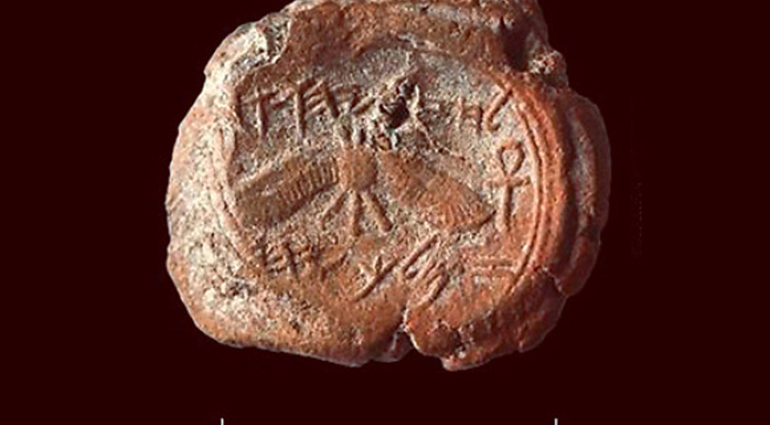
For five years, an ancient clay seal remained in a closet in Jerusalem’s Institute of Archaeology. After the seal was dug up at the foot of the southern part of Jerusalem’s old city wall, initial examination failed to establish the significance of the nearly 3,000-year-old object. But then a researcher carefully scrutinized the letters on the seal, resulting in a major discovery. The inscription, written in ancient Hebrew, reads: “Belonging to Hezekiah [son of] Ahaz king of Judah.”

At the center of the seal is a two-winged sun surrounded by two images symbolizing life. The archaeologists who discovered the seal believe that King Hezekiah began using this seal as a symbol of God’s protection after the Lord healed him from a life-threatening illness (Isa. 38:1–8). Hezekiah had been pleading with the Lord to heal him. And God heard his prayer. He also gave Hezekiah a sign that He would indeed do what He had promised, saying, “I will cause the sun’s shadow to move ten steps backward” (v. 8 nlt).

Lord, help me to believe in Your power and love, and to seek Your help always.
The facts related to this archeological artifact give us an encouraging reminder that the people in the Bible were learning, as we are, to call on the Lord who hears us when we cry out to Him for help. And even when His answers are not what we want or expect, we can rest assured that He is compassionate and He is powerful. The One who orders the movement of the sun can certainly move in our hearts.

Dear God, You are great and powerful, yet You care for me. Help me to believe in Your power and love, and to seek Your help always.

Call out to God; He is wanting to hear from you.

By Poh Fang Chia | See Other Authors
INSIGHT
Hezekiah, whose name means “whom Jehovah has strengthened,” was the son of Ahaz (2 Kings 18:1), one of the worst kings of ancient Judah. Hezekiah succeeded his father on the throne, reigning for twenty-nine years. Ignoring the disastrous example of his father, Hezekiah modeled himself after his great-grandfather, Uzziah. Hezekiah’s primary impact as king was in his role as a spiritual reformer. As part of this reform he destroyed the “bronze serpent” (see Num. 21:4–9). What was once a symbol of healing in Moses’s day had become an object of idolatrous worship. Hezekiah’s reign saw a season of spiritual renewal that had a profound impact on the kingdom (adapted from Easton’s Bible Dictionary).

God honored Hezekiah’s faithfulness and compassionately answered his prayer for healing. How have you seen God respond when you’ve cried out to Him?

Bill Crowder
 

boldstardex

Moderator
Staff member
A New Name
October 13, 2017


Read: John 1:35–42 | Bible in a Year: Isaiah 41–42; 1 Thessalonians 1


Jesus looked at him, and said, . . . “You will be called Cephas” (which, when translated, is Peter). John 1:42

In the article “Leading by Naming,” Mark Labberton wrote about the power of a name. He said: “I can still feel the impact of a musical friend who one day called me ‘musical.’ No one had ever called me that. I didn’t really play an instrument. I was no soloist. Yet . . . I instantly felt known and loved. . . . [He] noticed, validated, and appreciated something deeply true about me.”

Perhaps this is what Simon felt when Jesus renamed him. After Andrew was convinced that Jesus was the Messiah, he immediately found his brother Simon and brought him to Jesus (John 1:41–42). Jesus peered into his soul and validated and appreciated something deeply true about Simon. Yes, Jesus saw the failure and impetuous nature that would get him into trouble. But more than that He saw the potential of Simon to become a leader in the church. Jesus named him Cephas—Aramaic for Peter—a rock (John 1:42; see Matt. 16:18).

Lord, help me to see others through Your eyes.
And so it is with us. God sees our pride, anger, and lack of love for others, but He also knows who we are in Christ. He calls us justified and reconciled (Rom. 5:9–10); forgiven, holy, and beloved (Col. 2:13; 3:12); chosen and faithful (Rev. 17:14). Remember how God sees you and seek to let that define who you are.

Lord, thank You for knowing me fully, yet loving me like no other. Help me to see others through Your eyes.

No one can steal your identity in Christ.

By Marvin Williams | See Other Authors
INSIGHT
Renaming people was common in the Scriptures, for a name described something about the person. In Genesis 17:5–15 Abram is renamed Abraham. Abram, which means “exalted father,” became Abraham, “father of multitudes.” Abraham’s grandson Jacob, whose name means “heel-grabber” and “schemer,” was renamed Israel, “prince of God.” The despondent Naomi asked her neighbors to no longer call her Naomi (delightful), but Mara (bitterness) because of the hard life she had experienced (Ruth 1:20). In the New Testament, a Christ-follower named Joseph was called Barnabas by the apostles (Acts 4:36). Barnabas means “son of encouragement,” which perfectly captured this man’s interactions with other believers and with the church.

What name would describe you as a follower of Christ?

Bill Crowder
 

boldstardex

Moderator
Staff member
Held by God
October 14, 2017


Read: Psalm 131 | Bible in a Year: Isaiah 43–44; 1 Thessalonians 2


I have calmed and quieted myself, I am like a weaned child with its mother; like a weaned child I am content. Psalm 131:2

As I was nearing the end of lunch with my sister and her children one afternoon, my sister told my three-year-old niece, Annica, it was time to get ready for her nap. Her face filled with alarm. “But Aunt Monica did not hold me yet today!” she objected, tears filling her eyes. My sister smiled. “Okay, she may hold you first—how long do you need?” “Five minutes,” she replied.

As I held my niece, I was grateful for how, without even trying, she constantly reminds me what it looks like to love and be loved. I think sometimes we forget that our faith journey is one of learning to experience love—God’s love—more fully than we can imagine (Eph. 3:18). When we lose that focus, we can find ourselves, like the older brother in Jesus’s parable of the prodigal son, trying desperately to win God’s approval while missing out on all He has already given us (Luke 15:25–32).

Jesus, help us to be deeply rooted in Your love.
Psalm 131 is one prayer in Scripture that can help us to “become like little children” (Matt. 18:3) and to let go of the battle in our mind over what we don’t understand (Ps. 131:1). Instead, through time with Him we can return to a place of peace (v. 2), finding the hope we need (v. 3) in His love—as calm and quiet as if we were children again in our mothers’ arms (v. 2).

Lord, we are so grateful for those in our lives who remind us what it means to love and be loved. Help us to be ever more deeply rooted in Your love.

Like children, we can learn to rest in the love of God.

By Monica Brands | See Other Authors
INSIGHT
Psalm 131, written by David, is one of fifteen “songs of ascents” (Pss.120–134). Pilgrims on their way to Jerusalem sang these songs to celebrate the annual feasts (Deut. 16:16). In this psalm, David acknowledged that there are some things about God that he just couldn’t understand (cf. Deut. 29:29; Job 42:3; Eccl. 11:5; Isa. 55:8–9; Rom. 11:33–34). But David chose not to be troubled by matters that properly belonged to God (Ps. 131:1). Instead, like a weaned, contented child enjoying the protection and provision of a mother (v.2), David simply trusted God with a childlike faith and quiet confidence. Psalm 131 is a prayer of humility (v. 1), contentment (v. 2), and hope (v. 3).

How does reflecting on the character and love of God comfort you and allow you to rest in Him?
 

boldstardex

Moderator
Staff member
Room 5020
October 16, 2017


Read: Genesis 50:15–20 | Bible in a Year: Isaiah 47–49; 1 Thessalonians 4

https://odb.org/wp-content/themes/odbm-base/assets/download.php?file=https://dzxuyknqkmi1e.cloudfront.net/odb/2017/10/odb-10-16-17.mp3
You intended to harm me, but God intended it for good to accomplish what is now being done. Genesis 50:20

Jay Bufton turned his hospital room into a lighthouse.

The fifty-two-year-old husband, father, high school teacher, and coach was dying of cancer, but his room—Room 5020—became a beacon of hope for friends, family, and hospital workers. Because of his joyful attitude and strong faith, nurses wanted to be assigned to Jay. Some even came to see him during off-hours.

We can have confidence in our good and trustworthy God!
Even as his once-athletic body was wasting away, he greeted anyone and everyone with a smile and encouragement. One friend said, “Every time I visited Jay he was upbeat, positive, and filled with hope. He was, even while looking cancer and death in the face, living out his faith.”

At Jay’s funeral, one speaker noted that Room 5020 had a special meaning. He pointed to Genesis 50:20, in which Joseph says that although his brothers sold him into slavery, God turned the tables and accomplished something good: “the saving of many lives.” Cancer invaded Jay’s life, but by recognizing God’s hand at work Jay could say that “God intended it for good.” That’s why Jay could use even the ravages of cancer as an open door to tell others about Jesus.

What a legacy of unwavering trust in our Savior even as death was knocking at the door! What a testimony of confidence in our good and trustworthy God!

Lord, difficult things come into our lives so often. Please help us to trust You enough to see that nothing is beyond Your control. Help us to tell of Your love even in the tough times.

By God’s grace, we can have our best witness in the worst of times.

By Dave Branon | See Other Authors
INSIGHT
While Joseph’s story had a spectacularly happy ending, it did not come overnight. When Joseph became the primary character in the Genesis narrative, he was only seventeen years old (Gen. 37:2). After about ten years as a slave in the household of Potiphar (captain of the bodyguard, a high official in Pharaoh’s court), he had risen to a position of great trust, managing Potiphar’s household properties and affairs. However, after Potiphar’s wife falsely accused him, Joseph was imprisoned for two years (41:1). When he was set free and assigned the post of vice-chancellor of Egypt, he was thirty years old (41:46). But there were seven years of plenty followed by two years of famine (45:6) before he came face-to-face with his brothers. That means that from the time he was sold into slavery to the time of family reconciliation, twenty-two years had transpired!

How does the story of Joseph help you to realize there is no circumstance beyond God’s control?
 

boldstardex

Moderator
Staff member
“There is one body and one Spirit, just as you were called to one hope when you were called; one Lord, one faith, one baptism; one God and Father of all, who is over all and through all and in all.” Ephesians 4:4-5


THE DANGER OF DENOMINATIONS
October 17, 2017

I am part of a denominational church. There’s no problem with denominations. They are simply different regiments of Christ’s army doing the work of the church here on earth. Denominationalism, however, is a huge problem.

What is “denominationalism?” It’s when people make an idol of their denomination. It’s when people begin to rely more on rituals, traditions and the customs of their particular denomination than on Biblical revelation. It’s when a person or church is asked about their faith and their first response is – “I’m a Baptist, or Catholic, or Methodist,” rather than “I’m a Christian.”

For the Christian, the first answer when asked about your faith should be always be – “I’m a Christian.” We are called to be people of the kingdom of God. We’re called to let people know that we are followers of Jesus, not followers of a specific branch of Christianity. Therefore, our goal as Christians is to build up that kingdom, not our denomination. For that reason, our church supports kingdom vision no matter the denominational label. Why? Because Christ did not come to begin denominations. Christ came to begin the kingdom of God.

So what about you? Are you Kingdom focused? Don’t let non-believers stereotype you by a specific branch of Christianity. Instead, put Christ first and become known as a kingdom minded follower of Christ – a Christ-ian more than a Baptist, Methodist, Presbyterian, Catholic, Pentecostal or non-denominational. Be known as a devoted follower of Jesus!
 

boldstardex

Moderator
Staff member
We’ve Got the Power!
October 19, 2017


Read: Romans 7:14–25 | Bible in a Year: Isaiah 56–58; 2 Thessalonians 2


Since we live by the Spirit, let us keep in step with the Spirit. Galatians 5:25

The loud crackling noise startled me. Recognizing the sound, I raced to the kitchen. I’d accidently tapped the start button on the empty coffee maker. Unplugging the appliance, I grabbed the handle of the carafe. Then I touched the bottom of the container to ensure it wasn’t too hot to place on the tile counter. The smooth surface burned my fingertips, blistering my tender skin.

As my husband nursed my wound, I shook my head. I knew the glass would be hot. “I honestly do not know why I touched it,” I said.

The Holy Spirit transforms us through His love and by His grace.
My response after making such a mistake reminded me of Paul’s reaction to a more serious issue in Scripture—the nature of sin.

The apostle admits to not knowing why he does things he knows he shouldn’t do and doesn’t want to do (Rom. 7:15). Affirming that Scripture determines right and wrong (v. 7), he acknowledges the real, complex war constantly waging between the flesh and the spirit in the struggle against sin (vv. 15–23). Confessing his own weaknesses, he offers hope for victory now and forever (vv. 24–25).

When we surrender our lives to Christ, He gives us His Holy Spirit who empowers us to choose to do right (8:8–10). As He enables us to obey God’s Word, we can avoid the searing sin that separates us from the abundant life God promises those who love Him.

Lord, thanks for breaking the chains that used to bind us to a life controlled by our sinful nature.

The Holy Spirit transforms us through His love and by His grace.

By Xochitl Dixon | See Other Authors
INSIGHT
In Romans 7 the apostle Paul laments that sinful tendencies within us sometimes win out over righteous impulses. In what ways can we yield to the Holy Spirit’s power to experience more righteous living?

For further reading see ourdailyjourney.org/spirits-wind.

Dennis Fisher
 

boldstardex

Moderator
Staff member
When Beauty Never Ends
October 20, 2017


Read: Psalm 27:1–4 | Bible in a Year: Isaiah 59–61; 2 Thessalonians 3


Because your love is better than life, my lips will glorify you. Psalm 63:3

I love looking at the Grand Canyon. Whenever I stand at the canyon rim I see new brushstrokes of God’s handiwork that take my breath away.

Even though it’s just a (very large) “hole” in the ground, the Grand Canyon causes me to reflect on heaven. A very honest twelve-year-old asked me once, “Won’t heaven be boring? Don’t you think we’ll get tired of praising God all the time?” But if a “hole in the ground” can be so overwhelmingly beautiful we can’t stop looking at it, we can only imagine the joy of one day seeing the very Source of beauty—our loving Creator—in all of the pristine wonder of the new creation.

We were created to enjoy God forever.
David expressed this longing when he wrote, “One thing I ask from the Lord, this only do I seek: that I may dwell in the house of the Lord all the days of my life, to gaze on the beauty of the Lord” (Ps. 27:4). There’s nothing more beautiful than the presence of God, which draws near to us on this earth as we seek Him by faith, looking forward to seeing Him face to face.

On that day we’ll never tire of praising our amazing Lord, because we will never come to an end of fresh, new discoveries of His exquisite goodness and the wonders of the works of His hands. Every moment in His presence will bring a breathtaking revelation of His beauty and His love.

Beautiful Savior, please help me to seek You every day and to live even now in Your presence and Your love.

We were created to enjoy God forever.

By James Banks | See Other Authors
INSIGHT
God is worthy of our faith, hope, and confidence; His power and presence are the foundation of many of the Old Testament stories. But sometimes life makes us question what we know. It's hard to see these truths about God when life is hard. That's when we need to view our experience through the lens of Scripture.

David does just that in Psalm 27. Despite having been anointed king by Samuel, he is living as a vagrant and fugitive. Even though he is on the run and enemy armies are pursuing him (vv. 2–3), he is confident in the Lord (v. 3). It is just then—when David’s immediate experience suggests hopelessness—that he rests in the power and protection of the Lord. Turning his eyes away from his circumstances and toward the Lord bolstered David’s confidence. His one desire was not to be vindicated in front of his enemies, but to be in the presence of the Lord (v. 4). Turning to the Lord is what gave him confidence in the day of trouble (v. 5).

Where does your experience need to be understood through the lens of Scripture? What truth about God do you need to be reminded of today?

J.R. Hudberg
 

boldstardex

Moderator
Staff member
Brother to Brother
October 23, 2017


Read: Genesis 33:1–11 | Bible in a Year: Jeremiah 1–2; 1 Timothy 3


https://odb.org/wp-content/themes/odbm-base/assets/download.php?file=https://dzxuyknqkmi1e.cloudfront.net/odb/2017/10/odb-10-23-17.mp3
A new command I give you: Love one another. John 13:34

My brother and I, less than a year apart in age, were quite “competitive” growing up (translation: we fought!). Dad understood. He had brothers. Mom? Not so much.

Our story could have fit in the book of Genesis, which might well be subtitled A Brief History of Sibling Rivalry. Cain and Abel (Gen. 4); Isaac and Ishmael (21:8–10); Joseph and everyone not named Benjamin (ch. 37). But for brother-to-brother animosity, it’s hard to beat Jacob and Esau.

A new command I give you: Love one another. John 13:34
Esau’s twin brother had cheated him twice, so he wanted to kill Jacob (27:41). Decades later Jacob and Esau would reconcile (ch. 33). But the rivalry continued on in their descendants, who became the nations of Edom and Israel. When the people of Israel prepared to enter the Promised Land, Edom met them with threats and an army (Num. 20:14–21). Much later, as Jerusalem’s citizens fled invading forces, Edom slaughtered the refugees (Obad. 1:10–14).

Happily for us, the Bible contains not just the sad account of our brokenness but the story of God’s redemption as well. Jesus changed everything, telling His disciples, “A new command I give you: Love one another” (John 13:34). Then He showed us what that means by dying for us.

As my brother and I got older, we became close. That’s the thing with God. When we respond to the forgiveness He offers, His grace can transform our sibling rivalries into brotherly love.

Lord, we invite You to transform our relationships with Your healing love.

Sibling rivalry is natural. God’s love is supernatural.

By Tim Gustafson | See Other Authors
INSIGHT
Over twenty “one another” statements in the New Testament call us to focus on the needs of others. We are challenged to love, pray for, serve, comfort, and forgive one another.

This week, will you watch for ways to extend love and grace to others through His Spirit?


Bill Crowder
 

boldstardex

Moderator
Staff member
Jesus in Disguise
October 24, 2017


Read: Matthew 25:31–40 | Bible in a Year: Jeremiah 3–5; 1 Timothy 4

Whatever you did for one of the least of these . . . you did for me. Matthew 25:40

When a friend cared for her housebound mother-in-law, she asked her what she longed for the most. Her mother-in-law said, “For my feet to be washed.” My friend admitted, “How I hated that job! Each time she asked me to do it I was resentful, and would ask God to hide my feelings from her.”

But one day her grumbling attitude changed in a flash. As she got out the bowl and towel and knelt at her mother-in-law’s feet, she said, “I looked up, and for a moment I felt like I was washing the feet of Jesus Himself. She was Jesus in disguise!” After that, she felt honored to wash her mother-in-law’s feet.

Jesus, help me to love others in Your name.
When I heard this moving account, I thought of Jesus’s story about the end of time that He taught on the slopes of the Mount of Olives. The King welcomes into His kingdom His sons and daughters, saying that when they visited the sick or fed the hungry, “Whatever you did for one of the least of these brothers and sisters of mine, you did for me” (Matt. 25:40). We too serve Jesus Himself when we visit those in prison or give clothes to the needy.

Today, might you echo my friend, who now wonders when she meets someone new, “Are you Jesus in disguise?”

Lord Jesus Christ, You can transform the most mundane of tasks. Help me to love others in Your name.

When we serve others, we serve Jesus.

By Amy Boucher Pye | See Other Authors
INSIGHT
Matthew 25:31–40 is a powerful reminder of Jesus’s care for those who are hurting. In fact, since the “least of these” (v. 40) in Matthew consistently refers to followers of Jesus (see 10:42; 18:6), the passage implies we are likely to find true believers in Jesus in circumstances of great suffering. Those who are not in such suffering are judged on their willingness to serve and join with those who are. When they do, they encounter Jesus Himself (v. 40).

When have you most strongly experienced the presence of Jesus through being with someone who was suffering?

Monica Brands
 

boldstardex

Moderator
Staff member
Surviving the Wilderness
October 25, 2017


Read: Exodus 17:1–7 | Bible in a Year: Jeremiah 6–8; 1 Timothy 5

The message they heard was of no value to them, because they did not share the faith of those who obeyed. Hebrews 4:2

In the 1960s, the Kingston Trio released a song called “Desert Pete.” The ballad tells of a thirsty cowboy who is crossing the desert and finds a hand pump. Next to it, Desert Pete has left a note urging the reader not to drink the water in the jar left there but to use its contents to prime the pump.

The cowboy resists the temptation to drink and uses the water as the note instructs. In reward for his obedience, he receives an abundance of cold, satisfying water. Had he not acted in faith, he would have had only a jar of unsatisfying, warm water to drink.

Help us to place our trust in You, Lord. You are what our heart thirsts after.
This reminds me of Israel’s journey through the wilderness. When their thirst became overwhelming (Ex. 17:1–7), Moses sought the Lord. He was told to strike the rock of Horeb with his staff. Moses believed and obeyed, and water gushed from the stone.

Sadly, Israel would not consistently follow Moses’s example of faith. Ultimately, “the message they heard was of no value to them, because they did not share the faith of those who obeyed” (Heb. 4:2).

Sometimes life can seem like an arid desert. But God can quench our spiritual thirst in the most unlikely circumstances. When by faith we believe the promises of God’s Word, we can experience rivers of living water and grace for our daily needs.

Help us to place our trust in You, Lord. You are what our heart thirsts after.

Only Jesus, the Living Water, can satisfy our thirst for God.

By Dennis Fisher | See Other Authors
INSIGHT
Three days after the Israelites left Egypt, the water they brought along was depleted. Finding no drinkable water in the Desert of Shur, they grumbled against Moses, and God miraculously made bitter water into good water (Ex. 15:22–25). Soon their food supplies ran out, and they complained again. God miraculously fed them with manna and quail (16:1–36). As they approached Sinai, they complained yet again of no water (17:1–2). God had already shown them He could provide the water and food they needed. All they had to do was to trust Him! (Deut. 8:2; Ps. 81:7–8).

Consider how God has been faithful to provide for your physical needs. How has He satisfied your spiritual thirst?

Sim Kay Tee
 

boldstardex

Moderator
Staff member
Exceedingly Better
October 26, 2017


Read: 1 Chronicles 17:1–15 | Bible in a Year: Jeremiah 9–11; 1 Timothy 6


He is the one who will build a house for me, and I will establish his throne forever. 1 Chronicles 17:12

My birthday is the day after my mother’s. As an adolescent, I would scramble to think of a gift that delighted my mom yet fit in my budget. She always received my purchases with appreciation, and on the following day, my birthday, she would present her gift to me. Without fail, her gift vastly outshone mine. Her intention wasn’t to diminish what I’d given her; she simply gave generously from her resources, which far exceeded my own.

My desire to give to my mother reminds me of David’s wish to build a home for God. Struck by the contrast between his palace and the tent where God revealed Himself, David longed to build God a temple. Instead of granting David’s wish to give, God responded by giving David an exceedingly better gift. God promised that not only would one of David’s children (Solomon) build the temple (1 Chron. 17:11), but that He would build David a house, a dynasty. That promise began with Solomon but found its ultimate fulfillment in Jesus, whose throne was indeed “established forever” (v. 12). David wanted to give from his finite resources, but God promised something infinite.

God’s gift to us in Jesus Christ exceeds all gifts.
Like David, may we always be moved to give to God out of gratitude and love. And may we always see how much more abundantly He has given to us in Jesus.

Father God, I thank You for Your astounding gift to me in Jesus Christ. Your love overwhelms me.

God’s gift to us in Jesus Christ exceeds all gifts.
 

boldstardex

Moderator
Staff member
Unraveling the Mysteries
October 30, 2017


Read: Psalm 119:97–104 | Bible in a Year: Jeremiah 20–21; 2 Timothy 4


I gain understanding from your precepts; therefore I hate every wrong path. Psalm 119:104

I have always enjoyed the wit and insight of Peanuts creator, Charles Schulz. One of my favorite cartoons drawn by him appeared in a book about young people in the church. It shows a young man holding a Bible as he tells a friend on the phone, “I think I’ve made one of the first steps toward unraveling the mysteries of the Old Testament . . . I’m starting to read it!” (Teen-Ager Is Not a Disease).

Psalm 119 overflows with the writer’s hunger to understand and experience the power of God’s Word each day. “Oh, how I love your law! I meditate on it all day long” (v. 97). This eager pursuit leads to growing wisdom, understanding, and obedience to the Lord (vv. 98–100).

Lord, thank You for the Bible, which gives us wisdom and understanding.
The Bible doesn’t contain a magic formula for “unraveling the mysteries” in its pages. The process is more than mental and requires a response to what we read. While some passages may remain puzzling to us, we can embrace those truths we clearly understand, and say to the Lord, “How sweet are your words to my taste, sweeter than honey to my mouth! I gain understanding from your precepts; therefore I hate every wrong path” (vv. 103–104).

A wonderful journey of discovery awaits us in God’s Word.

Lord, thank You for the Bible, which gives us wisdom and understanding to follow Your pathway of life today.

A commitment to read and follow God’s Word begins a daily journey of discovering His love and power.

By David C. McCasland | See Other Authors
INSIGHT
Psalm 119 is well known as the longest chapter in the Bible. It is an acrostic psalm where each section begins with a letter of the Hebrew alphabet. This psalm praises the goodness and value of God’s law. The law is a reflection of God’s character; as we look at the law, we learn about Him.

As you spend time studying God’s Word this week, reflect on what you learn about the character of God.
 

boldstardex

Moderator
Staff member
Living Anonymously
November 2, 2017


Read: Romans 12:1–13 | Bible in a Year: Jeremiah 27–29; Titus 3


Let us have real warm affection for one another as between [family]. Romans 12:10 Phillips

My well-worn and often-read copy of Jane Yolen’s essay “Working Up to Anon” (Anonymous) was clipped from The Writer magazine many years ago. “The best writers,” she says, “are the ones who really, in their heart of hearts, aspire to the byline Anon. The story told is important, not the storyteller.”

The story we tell is about Jesus, the Savior, who gave His life for us. Together with other believers we live for Him and share His love with others.

“He must become greater; I must become less.” (John 3:30)
Romans 12:3–21 describes the attitude of humility and love that should permeate our relationships with each other as followers of Jesus. “Don’t cherish exaggerated ideas of yourself or your importance, but try to have a sane estimate of your capabilities by the light of the faith that God has given to you all. . . . Let us have real warm affection for one another as between [family], and a willingness to let the other [person] have the credit” (vv. 3, 10 J.B. Phillips New Testament).

Pride in our past accomplishments can blind us to the gifts of others. Arrogance can poison the future.

John the Baptist, whose mission was to pave the way for Jesus, said, “He must become greater; I must become less” (John 3:30).

That’s a good motto for us all.

I admit, Lord, that I have a lot to learn about humility. Help me to see You for who You are so You and others have their rightful place in my life.

Always be humble before God and allow Him to be your all in all. Oswald Chambers

By David C. McCasland | See Other Authors
INSIGHT
In the letter to the church at Rome, Paul was writing to Jesus-followers he had never met and was one day hoping to visit (see Rom. 1:8–11). In this message he challenged them to serve with humility and love.
 

boldstardex

Moderator
Staff member
Powerful Baby
November 3, 2017


Read: Psalm 13 | Bible in a Year: Jeremiah 30–31; Philemon


Download MP3
Subscribe to iTunes


How long, Lord? Will you forget me forever? . . . But I trust in your unfailing love. Psalm 13:1, 5

The first time I saw him, I cried. He looked like a perfect newborn asleep in his crib. But we knew he would never wake up. Not until he was in the arms of Jesus.

He clung to life for several months. Then his mother told us of his death in a heart-wrenching email. She wrote of “that deep, deep pain that groans inside you.” Then she said, “How deeply God carved His work of love into our hearts through that little life! What a powerful life it was!”

God can do the most with what we think is least.
Powerful? How could she say that?

This family’s precious little boy showed them—and us—that we must depend on God for everything. Especially when things go horribly wrong! The hard yet comforting truth is that God meets us in our pain. He knows the grief of losing a Son.

In our deepest pain, we turn to the songs of David because he writes out of his own grief. “How long must I wrestle with my thoughts and day after day have sorrow in my heart?” he asked (Ps. 13:2). “Give light to my eyes, or I will sleep in death” (v. 3). Yet David could give his biggest questions to God. “But I trust in your unfailing love; my heart rejoices in your salvation” (v. 5).

Only God can bring ultimate significance to our most tragic events.

Where do I turn when a crisis hits me? Do I ever get angry with God when facing grief and loss? Am I afraid to share my true emotions with Him? Have I ever asked God for His peace?

God can do the most with what we think is least.

By Tim Gustafson | See Other Authors
INSIGHT
We may be surprised to hear a cry of abandonment coming from David, a man who knew God intimately. Psalm 13 describes David’s struggle. He was threatened by powerful enemies and distressed by God’s seeming prolonged apathy and absence, feeling forsaken in the time of his greatest need. “How long, Lord?” he asks. David questioned if God would ever come to his rescue (vv. 1–2). Even as he felt the sting of abandonment, David turned his turmoil over to God, asking Him for a deeper understanding of his circumstances (vv. 3–4). Anchoring himself in God’s unfailing covenantal love, David renews his trust in God (vv. 5–6).

Like David, you may be going through a rough patch, engulfed by feelings of dread and abandonment. God may seem silent, but He is never absent. Scripture confirms He will never leave or forsake anyone who calls on Him (Heb. 13:5–6).

Sim Kay Tee
 

boldstardex

Moderator
Staff member
"So he got up and came to his father. But while he was still a long way off, his father saw him and felt compassion for him, and ran and embraced him and kissed him." - Luke 15:20

YOU CAN ALWAYS TURN AROUND
November 4, 2017

Robert Frost wrote, “Home is the place where when you have to go there, they have to take you in.” There’s no place like home. No matter how bad we mess up or how disappointing life gets, it’s the one place we can usually find safe love.

Jesus told of a wayward son who messed up big time, wasting all his dad had blessed him with. He became homeless and was so hungry he wanted to eat leftover slop fit only for animals. But when he came to his senses, he thought about home. He knew he didn’t deserve to go there, but he went anyway. And his dad was so overwhelmed with joy he welcomed him home.

The dad represents God, and the wayward son represents you and me. It’s Jesus’ way of telling us that we all mess up–but nobody messes up so badly that when he decides to come home to the Lord, the Lord won’t welcome him back to a right relationship with Him. Is it time for you to come home to the Lord?
 

boldstardex

Moderator
Staff member
“Truly I tell you, people can be forgiven all their sins and every slander they utter, but whoever blasphemes against the Holy Spirit will never be forgiven; they are guilty of an eternal sin.” Mark 3: 28- 29

THE UNFORGIVEABLE SIN
November 6, 2017

When Jesus died on the cross He paid the penalty for all our sins. That means there’s no baggage and no regret too big to leave at the cross. There’s no sin too big for Christ’s forgiveness. So what does Jesus mean when talking about “an unforgiveable sin?” Is there really an unforgiveable sin?

If this topic is making you nervous, let me put your mind at ease. If you’re skimming through your list of sins and wondering about an “unforgiveable sin,” you can stop worrying. When you acknowledge your own sinfulness and recognize your need for a Savior, you’ll never come close to what Jesus says is the unforgiveable sin: blasphemy of the Holy Spirit.

What exactly is blasphemy against the Holy Spirit? It’s an attitude whereby a person is so blind to their own sins that they only see the sins of others. It’s when a person doesn’t see a need for a Savior to forgive them of their sins. Someone who rejects Jesus as God’s Son. That person is headed towards the unforgiveable sin. If they die with that mindset, they will never be forgiven. In Jesus’ day, many religious leaders fell into this category. If this sounds like you, it’s time for some serious self-reflection. Don’t let your self-righteous pride keep you from recognizing that we are all sinners seriously in need of a forgiving Savior – Jesus Christ.
 

boldstardex

Moderator
Staff member
Think Before You Speak
November 8, 2017


Read: Psalm 141 | Bible in a Year: Jeremiah 43–45; Hebrews 5


Set a guard over my mouth, Lord; keep watch over the door of my lips. Psalm 141:3

Cheung was upset with his wife for failing to check the directions to the famous restaurant where they hoped to dine. The family had planned to round out their holiday in Japan with a scrumptious meal before catching the flight home. Now they were running late and would have to miss that meal. Frustrated, Cheung criticized his wife for her poor planning.

Later Cheung regretted his words. He had been too harsh, plus he realized that he could have checked the directions himself and he had failed to thank his wife for the other seven days of great planning.

Jesus, give us the words to say and the wisdom to know when to keep silent.
Many of us may identify with Cheung. We are tempted to blow up when angry and to let words fly without control. Oh, how we need to pray as the psalmist did: “Set a guard over my mouth, Lord; keep watch over the door of my lips” (Ps. 141:3).

But how can we do that? Here’s a helpful tip: Think before you speak. Are your words good and helpful, gracious and kind? (See Eph. 4:29–32.)

Setting a guard over our mouth requires that we keep our mouth shut when we’re irritated and that we seek the Lord’s help to say the right words with the right tone or, perhaps, not speak at all. When it comes to controlling our speech, it’s a lifelong work. Thankfully, God is working in us, giving us “the desire and the power to do what pleases him” (Phil. 2:13 nlt).

Dear Lord, help us always to think before speaking. Give us the words to say and the wisdom to know when to keep silent.

Gracious words are a honeycomb, sweet to the soul and healing to the bones. Proverbs 16:24

By Poh Fang Chia | See Other Authors
INSIGHT
Scripture has a great deal to say about the power of our words. One of the most familiar New Testament passages is James 3:1–12. According to James, keeping control of our tongue is one of the hardest things we can do. However, before we lose hope in being able to speak good words to one another, consider David’s words in Psalm 141.

Here, tucked in the middle of his other requests, David asks the Lord to set a guard over his mouth (v. 3). He desires to live a life that contrasts with the evildoers around him (v. 5). Spirit-controlled and God-honoring speech is one thing that separates the righteous from evildoers, and it is God who helps us control our speech.

J.R. Hudberg
 

boldstardex

Moderator
Staff member
A Good Ending
November 9, 2017


Read: Revelation 22:1–5 | Bible in a Year: Jeremiah 46–47; Hebrews 6


The throne of God and of the Lamb will be in the city, and his servants will serve him. They will see his face. Revelation 22:3–4

As the lights dimmed and we prepared to watch Apollo 13, my friend said under his breath, “Shame they all died.” I watched the movie about the 1970 spaceflight with apprehension, waiting for tragedy to strike, and only near the closing credits did I realize I’d been duped. I hadn’t known or remembered the end of the true story—that although the astronauts faced many hardships, they made it home alive.

In Christ, we can know the end of the story—that we too will make it home alive. By that I mean we will live forever with our heavenly Father, as we see in the book of Revelation. The Lord will create a “new heaven and a new earth” as He makes all things new (21:1, 5). In the new city, the Lord God will welcome His people to live with Him, without fear and without the night. We have hope in knowing the end of the story.

God promises His people a good end to the story.
What difference does this make? It can transform times of extreme difficulty, such as when people face the loss of a loved one or even their own death. Though we recoil at the thought of dying, yet we can embrace the joy of the promise of eternity. We long for the city where no longer will there be any curse, where we’ll live forever by God’s light (22:5).

Lord Jesus Christ, give me unfailing hope, that I might rest in Your promises and welcome Your life eternal.

God promises His people a good end to the story.

By Amy Boucher Pye | See Other Authors
INSIGHT
In Matthew Henry’s Concise Commentary on the Whole Bible, he writes about Revelation 22:1–5: “The presence of God in heaven is the health and happiness of the saints. . . . The devil has no power there . . . . There will be no night; no affliction or dejection, no pause in service or enjoyment: no diversions or pleasures of man’s inventing will be desired there.” In this “new heaven and earth,” Jesus will wipe away our tears and “there will be no more death or mourning or crying or pain” (21:4). The promise of an end to our suffering can bring a glimmer of hope and joy to our life when we face difficulties, but the brightest hope comes in the knowledge that one day we as His followers will be in the presence of our Lord who loves us. Free from temptation, free from sin, and free from pain and sadness and death, we’ll have only joy in the service of the King!

How does the promise of this bright future help you today when you face troubles and trials? What about heaven do you most anticipate?

Alyson Kieda
 

boldstardex

Moderator
Staff member
The Hand of Comfort
November 10, 2017


Read: 2 Corinthians 1:3–7 | Bible in a Year: Jeremiah 48–49; Hebrews 7


Praise be to the God and Father of our Lord Jesus Christ, . . . who comforts us in all our troubles. 2 Corinthians 1:3–4

“Patient is combative,” the nurse’s notes read.

What she didn’t realize until later was that I was having an allergic reaction as I awakened after a complicated open-heart surgery. I was a mess, with a tube down my throat. My body began shaking violently, straining against the straps on my arms, which were there to keep me from suddenly pulling out my breathing tube. It was a frightening and painful episode. At one point, a nurse’s assistant to the right side of my bed reached down and simply held my hand. It was an unexpected move, and it struck me as especially gentle. I began to relax, which caused my body to stop shaking so badly.

Thank You, Father, for the comfort You provide to us.
Having experienced this with other patients, the nurse’s assistant knew that a hand of comfort could minister to me as well. It was a vivid example of how God uses comfort when His children suffer.

Comfort is a powerful and memorable tool for any caregiver, and Paul tells us in 2 Corinthians 1:3–4 it’s an important part of God’s toolbox. Not only that, but God also multiplies the impact of His comfort by calling us to use the memory of the comfort He gives us to comfort others in similar situations (vv. 4–7). It is but another sign of His great love; and one we can share with others—sometimes in the simplest of gestures.

Thank You, Father, for the comfort You provide to us, either directly or through the acts of Your children. Help us to see where we can apply that same comfort to others in and for Your name.

Simple gestures can bring powerful comfort.

By Randy Kilgore | See Other Authors
INSIGHT
This passage demonstrates how our personal pain can help others who suffer. Paul uses the word comfort both vertically and horizontally. God extends comfort to us, then we can offer comfort to others. In this way, our pain can become a conduit of care for those in distress and lead to gratitude in the midst of pain. “Praise be to the God and Father of our Lord Jesus Christ, the Father of compassion and the God of all comfort” (2 Cor. 1:3).

Can you think of a time when God used others to encourage and comfort you?
 
Top