• If your have CLUB EVENTS/RIDE & would like to announce it here,
    Message traxxas-modifier about it :-)

Drag race T135 version

docgabby

Super Veteran
BASIC RULE FOR CAM TIMING ARE:
"ADVANCING" THE CAM IMPROVES LOW END TORQUE AND RESPONSE AT THE EXPENSE OF HIGH RPMs.
"RETARDING" THE CAM IMPROVES TOP-END AT THE EXPENSE OF LOW SPEED RESPONCE.
THE HIGHER THE COMPRESSION RATIO THE WIDER THE LOBE CENTERLINE ANGLES. THE LOWER THE COMPRESSION RATIO THE MORE OVERLAP OR A NARROWER LOBE CENTERLINE.

*******************************************************
THE CAM TIMING WHEN CHECKED AND SET AT THE DESIRED POSITION SHOULD" ALWAYS" TAKE INTO CONSIDERATION "CHAIN STRETCH OR TIMING BELT DEFLECTION" THUS, ALTERING OR RETARDING THE CAMSHAFT AT HIGH RPMs!
MANY OVERLOOK THIS !
(this scenario has me advancing my cam timing 2* advance to anticipate belt/chain stretch retarding the cam phasing, the more evident when heavy spring pressures are used for high lifts!)

*******************************************************
WHEN WE ARE DEGREEING A CAMSHAFT AT "ZERO" WHAT ARE WE ACCOMPLISHING AS IT RELATES TO THE ENGINES PERFORMANCE? BE IT WITH A STOCK CAMSHAFT OR AN ALL OUT GRIND WITH A SPLIT DURATION! SO HERE WE START AND TRY TO SIMPLIFY AND EXPLAIN THE NET EFFECT....

FACTORY CAMSHAFTS FOR MOST ENGINES ARE WHAT THEY CALL "SPLIT OVERLAP DESIGN". THIS MEANS BOTH VALVES INTAKE AND EXHAUST, ARE OPEN AN EQUAL DISTANCE AT TDC "OVERLAP".
THIS IS ALSO CALLED A SINGLE PATTERN CAMSHAFT. THIS IS MOST LIKELY THE STOCK TYPE AND WE START WITH THIS TO KEEP OUR PERSPECTIVE IN CHECK SO AS TO HAVE CONTINUITY FOR THE NOVICE ENGINE AFFICIONADOS.

DEGREEING A CAM SPECIALLY WHEN YOU COMPETE IN CLASSES THAT REQUIRE A "FACTORY STOCK" ENGINE WILL YIELD DIVIDENDS! THE FACTORY CAMSHAFT WAS OPTIMIZED AT THE ZERO TIMING POSITION, THIS ALLOWS THE ENGINE TO RUN AT ITS DESIGNED CONFIGURATION...HOWEVER ANY KIND OF MODIFICATIONS ON THE INTAKE AND EXHAUST USUALLY MAY RENDER THIS LESS THAN OPTIMUM.

FOR EXAMPLE: IF YOUR FACTORY CAR/MOTORCYCLE IS INVOLVE IN A TOP END/TOP SPEED ONLY CONTEST?
THE CAM TIMING SHOULD BE RETARDED AT LEAST 2-4* FROM FACTORY. THIS IN EFFECT WILL PLACE YOUR RPMs A LITTLE HIGHER FROM PEAKING OR RUNNING OUT OF STEAM!
THE REASON BEING A RETARDED CAMSHAFT WILL LET THE INTAKE VALVE STAY OPEN LONGER, TO GIVE THE COLUMN OF "INERTIA RAM" OF AIR/ FUEL TO CONTINUE FILLING THE CYLINDERS PAST BDC PISTON POSITION. IN SHORT THE LATER CLOSING OF THE INTAKE VALVE BENEFITS THE HIGHER THE RPMs! ALL THIS GAINS WILL BE AT THE PENALTY OF LOW SPEED RESPONCE FROM THE REDUCTION OF DYNAMIC CYLINDER PRESSURES!
----------------------------------------------------------------------------------
DYNAMIC COMPRESSION" IS THE ACTUAL COMPRESSION RATIO THE ENGINE SEES AFTER THE INTAKE VALVE CLOSES ON THE INTAKE STROKE! THE INTAKE VALVE USUALLY CLOSES PAST BDC PISTON POSITION AND WHEN IT FINALLY CLOSES THE COMPRESSION IS ACTUALLY LOWER THAN THE COMPUTED MECHANICAL COMPRESSION RATIO!
----------------------------------------------------------------------------------
SO WHAT SITUATIONS DO YOU" ADVANCE" THE STOCK CAMSHAFT?
WHEN YOU HAVE A RACE AT A HIGH ELEVATIONS LIKE" PIKES PEAK" IN COLORADO OR A SLALOM EVENT AT " BAGUIO" IN THE PHILIPPINES! THIS HIGH ELEVATIONS HAVE A LESS DENSER ATMOSPHERE OR WEIGHT. THIS SITUATION RENDERS THE CAR WITH A LOT LESS AIR TO INGEST IN THE CYLINDERS. THAT IS WHY WHEN YOU ARE AT THIS PLACES, THE ENGINE JUST DOES NOT HAVE THE SAME POWER AS IT HAS ON SEA LEVEL OR LOWER ELEVATION RACETRACKS....IT JUST PLAIN HAVE LESS POWER HERE!

ADVANCING YOUR CAMSHAFT AGAIN 2-4* OR MORE WILL HELP YOU REGAIN SOME OF THIS DYNAMIC PRESSURES LOST DUE TO ELEVATION. YOU ARE FOOLING THIS ENGINE INTO THINKING, WITH CAM TIMING, THAT IT GAINED SOME COMPRESSION AT THIS ALTITUDE. AS THE EARLIER CLOSING OF THE INTAKE VALVES RESULTS IN A HIGHER DYNAMIC COMPRESSION RATIO!

SUCCESSFULL PIKES PEAK RACERS USUALLY HAVE A HIGHER THAN NORMAL COMPRESSION RATIOS AND OR ADVANCED CAM TIMING IN ANTICIPATING THE EVER INCREASING ALTITUDE THAT THEY HAVE TO CLIMB TO THE FINISH LINE....
SO WORD ON ADVICE TO THE BAGUIO RACERS.....ADVANCE YOUR CAMSHAFTS!!!
----------------------------------------------------------------------------------
SO NOW WE ARE AT THE HIGH PERFORMANCE CAMSHAFTS.....

MOST PEOPLE INCLUDING MYSELF, HAS "OVER CAMMED" AT ONE TIME OR ANOTHER!
SOME JUST DO IT ALL THE TIME!
SO I WILL SHED SOME LIGHT INTO SOME TIPS ON HOW TO KNOW IF YOU ARE OVER THE TOP...

WHEN BUYING YOUR FIRST CAMSHAFT AND GETTING IT INSTALLED AND DEGREED. MAKE SURE YOU DID NOT MISS TO CHECK THE CRANKING COMPRESSION PRESSURES ON YOUR ENGINE WITH THE STOCK CAMSHAFT!
THE REASON I STRESS THIS IS BECAUSE WHEN YOU HAVE THE STOCK CAM IN PLACE, DON'T FORGET TO DO A COMPRESSION CHECK.
EXAMPLE= 185# PSIG OF PRESSURE
TAKE NOTE OF THIS AND AVERAGE ALL YOUR READINGS....

NEXT AFTER INSTALLING YOUR NEW CAM AND DEGREED OR JUST LINED UP TO FACTORY MARKS.
DO ANOTHER COMPRESSION CHECK AND TAKE NOTE OF THE NEW READINGS......

DID THE COMPRESSION NUMBERS DROP FROM 185# TO NOW 130-145# ???

THIS DROP IN COMPRESSION PRESSURES IS "NORMAL" AND INDICATES TO ME THAT YOUR ENGINE WILL LOSE SIGNIFICANT LOW-MID RANGE RESPONCE OR TORQUE!
THIS IS DUE TO THE DURATION OF THIS CAMSHAFT THAT EXTENDS THE VALVE EVENTS.
THE INTAKE VALVE CLOSING LATE, THIS DROPS YOUR DYNAMIC COMPRESSION.
THAT IS LIKE GETTING A LOWER COMPRESSION ENGINE IN THE PROCESS! THIS IS THE REASON "BIG" CAMS HAVE SOFTER RESPONCE AT LOWER RPMs!

IF THE CAM IS MILDER? THE COMPRESSION TEST WILL NORMALLY SEE A LOT LESS DROP IN COMPRESSION PRESSURES, IF IT IS 10-20# LESS? IT PROBABLY WILL NOT LOOSE LOW-MID RANGE PULLING POWER....

SO WHAT DO YOU DO WHEN THE PRESSURES ARE LIKE THE FIRST EXAMPLE OF ONLY 130-145# ???

RUN THE CAR AT THE TRACK AND DO "CONSISTENT" BACK TO BACK PASSES TO HAVE CONSISTENT DATA AND RESULTS.....
NOW ADVANCED THE CAMSHAFT 2-4* AND DO A COMPRESSION PRESSURE CHECK.....ADVANCING INCREASED PRESS. TO 175???

THIS INCREASED IN COMPRESSION PRESSURES WILL INCREASE RESPONCE AND IF RUN AT THE TRACK WILL PROBABLY GO FASTER DUE TO A MORE RESPONSIVE AND TORQUEY ENGINE!!!
AND IF IT DID RUN FASTER??? THE CAM IS PROVING TO BE TOO BIG!!! "ADVANCING THE CAM" WILL MAKE IT ACT LIKE A MILDER/SMALLER CAMSHAFT....

BUT WHAT IF YOU HAVE A LOT OF CRANKING PRESSURES EVEN AFTER A CAM CHANGE?
ADVANCING THE CAM PROBABLY WILL BOOST THE LOW-MID RESPONCE AT THE COST OF HIGH RPMs!
THIS SIGNIFY'S THAT THE ENGINE ALSO HAS AMPLE COMPRESSION RATIO AND THE CAM IS PROBABLY JUST RIGHT FOR THE COMBINATION HERE....

AND IF THIS IS CAM IS" RETARDED" AND GAINS SPEED AT THE TRACK? THIS TELLS YOU IT IS PROBABLY OR LIKELY TO BE ON THE SMALL SIDE!!!

THE PERFECT SCENARIO IS WHEN YOU HAVE THE CAM INSTALLED AS PER CAMSHAFT MANUFACTURERS SPECS @ STRAIGHT UP OR AT "ZERO".
ADVANCING AND OR RETARDING THIS CAMSHAFT YIELDED LESS OR NO CHANGE IN SPEED OR LAP TIMES ???
YOU PROBABLY HIT THE MARK VERY WELL!
THIS TELLS YOU YOUR RIGHT ON THE MONEY ON YOUR CAM PROFILE AT THIS POINT....NEITHER TOO BIG OR SMALL!

SO TO WRAP THIS UP!
DO NOT BE AFRAID TO EXPERIMENT OR TEST BEYOND THE FACTORY SETTING AS LONG AS YOU CHECKED VALVE TO PISTON CLEARANCE FROM +8* TO -8* DEGREES EITHER WAY.....

SO IF YOUR ADVANCED BEYOND 4* DEGREES ? car got faster...
GET A SMALLER CAM!
RETARDED BEYOND -4* DEGREES ? car got faster...
STEP UP! YOUR CAMSHAFT SPECIFICATIONS.

ADVANCED OR RETARDED 6-8* DEGREES AND RAN FASTER?
YOU OR YOUR ENGINE BUILDER ARE REALLY- "RETARDED" !
YOU GUYS ARE BARKING AT THE WRONG TREE!
GO BACK AND RE-LEARN THE BASICS.....lol good luck!

TRACK TIPS:

EVEN WHEN MY RACECAR IS OPTIMIZED ON EVERY ASPECT,
YOU SHOULD KEEP TRYING DIFFERENT THINGS ALWAYS!
THIS GIVES YOU THE EDGE, SPECIALLY WHEN THEY DONT TEST.....
BUT TEST ONLY "ONE THING" AT A TIME TO EVALUATE THE CHANGES INDIVIDUALLY ON ITS OWN MERITS!

AS FOR "CAM TIMING" CHANGES AT THE TRACK?

MANY TIMES WHEN THE TRACK HAS "EXCELLENT" TRACTION OR HOOK-UP. WE WILL TRY TO ADVANCE THE CAMSHAFT TO GAIN "TORQUE" OFF THE LINE! (faster lap times)
THE REVERSE IS TRUE WHEN THE TRACK IS MARGINAL OR SLIPPERY WE WILL RETARD TO KILL THE BOTTOM END TORQUE TO ENHANCE TRACTION!

WHEN YOUR CAM SELECTION IS OPTIMUM OR OPTIMIZED TO YOUR COMBINATION, TRY TO ALWAYS CHANGE YOUR CAM TIMING. THIS TO ADVANCE OR RETARD AS FOR THE REASONS
DESCRIBE ABOVE.

=========================================
MANY RACERS THAT GO TO THE TRACK ALSO "NOTICED" THAT THE BEST CAMSHAFTS WILL USUALLY PERFORM OR RUN BETTER @ 2* ADVANCED!
THIS IS BECAUSE OF "CHAIN/BELT DEFLECTION" OR "STRETCH" THAT WILL RESULT IN THE CAM RETARDING AT HIGH RPMs!
==========================
 

docgabby

Super Veteran
THE QUESTION OF FUEL Printer-friendly format
PART 6 -
Additive Performance Testing
By John Copeland
In earlier segments of this series we've talked about fuel additives used to improve engine performance. We've looked at the basic properties of fuels that may impact how much energy they make available upon combustion and how some additives may increase ( or decrease) that available energy. We've also looked at various means of detecting these additives and how the tech man can spot them in the field. Now it's time to take a hard-numbers look at what sort of advantage the fuel cheater can expect to gain from using these materials.

As you may recall from Part Five, (NKN June 1995), we established a threshold of detectability for each of the nine additives that we have been testing, both on the Digatron meter, and with two different water absorption tests. In order to generate meaningful data for this performance testing portion of the project, we ran fuel samples with more than one concentration of the additive in question. For example, earlier testing showed the threshold of detectability for Propylene Oxide to be about 2% by volume, when mixed with otherwise legal race gas. We then ran dyno testing on that fuel with 2% Propylene Oxide added and compared it back-to-back with the same sample with 10% added, also back-to-back against a legal sample. Hopefully this will address the question of "Oh yeah, Well I heard that Johnny Go-fast put some of that stuff in his gas and it gave him more top end between 18,000 and 19,000 RPM!" Let's find out if adding this stuff really works, and
how.

In order to insure uniformity of results, all samples were based on Phillips B32 race gas. Comparison testing on the dyno has shown that this high-quality race gas will produce consistently higher performance than four other race gasolines generally available, and substantially higher performance than any pump gas or combination of pump gases. As with earlier tests in this series all samples were mixed 20:1 with Burris oil, mixing four ounces of Burns Castor and two ounces of Burris Blend per gallon of fuel. All testing was done on Fox Valley Kart's electronic engine dyno with periodic base-line samples re-run to insure repeatable data. Torque readings, from which horsepower is calculated, are accurate to .001 foot-pounds. All data, torque, RPM, cylinder head and exhaust temp, are collected by the computer 10 times each second, then computer averaged around each plotting point. While the absolute horsepower numbers may vary from one dyno to another, what we're interested in here are comparative figures.

PROPYLENE OXIDE

Propylene Oxide's primary contribution to the combustion process centers on it's high heat of vaporization. As we discussed in Part Four of this series (NKN June 1995), this high heat of vaporization means that, as it passes from a liquid to a gaseous state in the carburetor, it absorbs a significant amount of heat and, thus, cools the incoming fuel charge significantly, making it denser. While Propylene Oxide brings along some of the oxygen it needs for it's own combustion, it also takes additional oxygen from the carburetor air. It's specific energy is slightly less than that of gasoline, so don't expect any help there. It's combustion products are C02, CO, and water vapor. As you can see from the graph, there is no measurable performance difference between the base-line fuel and the sample containing 2% Propylene Oxide, slightly above the threshold of detectability with the Digatron meter. However, by increasing the concentration to 10% by volume, well above what even the most bumbling tech man should be. able to spot, we begin to see the effect of improving the charge density on the low end. This effect diminishes as RPM increases, probably because this higher air velocity through the carb dramatically improves the atomization of the gasoline and the resulting chilling of the incoming charge.

Conclusion: Yes, using Propylene Oxide may help the low end performance or used in sufficient quantities. But unless there is no fuel tech at all, you can't get away with running enough to get any improvement.

NITROMETHANE

Nitromethane has been the number one fuel in the drag race's bag forever. When it comes to delivering maximum bang in the combustion chamber, Nitromethane is the ticket. But that big bang only comes with massive quantities of Nitromethane. Drag racers have the luxury of passing almost unlimited amounts of whatever fuel they choose through the induction system. Karters do not. To burn efficiently and liberate more energy than regular gasoline, you'll need on the order of 10 times more fuel if you use Nitromethane! Not a likely scenario given karter's garbs and their pumping capabilities. Anyway, in our first graph we see the effects of using 2% Nitromethane by volume verses un-doctored race gasoline. Last time we showed that Nitromethane was detectable on the Digatron meter at concentrations of less than 1%, but we chose to use 2% here to assure an adequate response. You can note that there is a very minor enhancement on the low end of the curve, and this may again be due to improved heat of vaporization as with the Propylene Oxide. But, as before, the output is absolutely identical at RPMs over 11,700. In the second graph, with 10% Nitromethane, we begin to see some measurable results from this additive. The low end increase is still there, indicating some higher energy output as well as the cooling effect. At higher RPMs the considerably higher specific energy of Nitromethane begins to show. Higher concentrations would undoubtedly generate even higher performance. But, because this material is so easily detectable, we do not see the need. One rather less attractive feature of
Nitromethane that appeared, even in the 10% concentration, is it's substantially higher heat output. During the relatively short duration of our dyno run, we saw cylinder head temperatures climb dramatically over what we had seen with the gasoline only sample. At the same time we saw exhaust temperatures fall, a combination indicative of detonation. It should be expected that extended running would require a richer mixture to avoid sticking. Such a richer mixture would probably diminish the performance improvements somewhat.

Conclusion: Like Propylene Oxide, it's unlikely that any performance improvement can be achieved using concentrations of Nitromethane that would make it past even the most rudimentary tech inspection.

NITROPROPANE

Nitropropane is, of course, chemically related to Nitromethane. It's more complex chemical bonding structure does not lend itself to the same specific energy potential as Nitromethane, and it is slightly more oxygen hungry. It is generally considered to be about 70% as potent an additive as Nitromethane, when used in sufficient quantities. One advantage over Nitromethane is Nitropropane's higher resistance to detonation. However, it's lower heat of vaporization diminishes the increase in charge density at low RPMs. Nitropropane is even more visible to the Digatron meter than the other additives tested, tripping the meter to +6 at only 2% by volume. Nonetheless, we tested it on the dyno at 2% and 10% to maintain some continuity with our testing procedures. As expected, the 2% Nitropropane sample exhibited no measurable performance improvement over the straight race gas results. Low RPM output actually decreased in the 11,300 RPM to 11,700 RPM range, with no apparent explanation. Likewise, there is a minor improvement between 13,200 RPM and 13,500 RPM. This increase is neither of sufficient magnitude or duration to be of any real value. The next graph, showing the effects of 10% Nitropropane, exhibits the same low RPM depression, only to a greater degree and longer duration, as the 2% sample. While we do not have a firm explanation for this effect, it is consistent with the earlier run. Further up in the RPM range, however, the enhancement effect of using Nitropropane is more apparent. Also, we did not see the same evidence of detonation with this sample as we saw earlier with the 10% Nitromethane.

Conclusion: Nitropropane can be a useful additive in settings where no fuel tech is being used. While less powerful than Nitromethane, it's higher resistance to detonation more than makes up for that deficiency. However, some as yet unexplained low RPM phenomenon actually hurts lower RPM performance, and the effect increases (that is the power DECREASES) as the concentration is increased. But, if the Digatron meter is in use, it'll probably go off when your drive in through the gate with this stuff.

ETHYL ETHER


Most commonly used, fuel-wise, as the major component in starting fluid for those cold winter mornings, Ethyl Ether has both a very high heat of vaporization and a very low flash point. Those properties make it the perfect cold weather engine starter but, (thank goodness) we don't race in sub-zero conditions. It's specific energy is lower than gasoline and it's very low boiling point (95 degrees) make it difficult to keep around in mixed fuel for very long: it simply evaporates away! Regardless, some folks have insisted that it was the secret key to better lap times, so let's take a look. In the first graph, again using 2% Ethyl Ether, We could find absolutely NO measurable variance in power output over the same fuel without the Ethyl Ether. Tiny variances in the raw data were too small to show up on the graph at all. By increasing the concentration to 10% the effect of the high heat of vaporization begins to show up on the low end. The cooling effect of the vaporization of the Ethyl Ether treated fuel was greatest at the lowest RPM and steadily decreased. Although it is hard to pick up on the graph, the performance actually dipped below that of the undiluted race gas at the highest RPM range, although very slightly. Once again, Ethyl Ether is very easily detectable with the Digatron meter in concentrations as low as 1%.


Conclusion: Unless you're racing at the South Pole, there really isn't anything to be gained here. Small concentrations don't do anything at all. And even if you wanted to run enough to get the minor low speed charge cooling effect. the smell is a dead give-away. Spend your time and money elsewhere.

TOLUENE AND XYLENE

We've chosen to lump Toluene and Xylene together for several reasons. If you read the previous article (NKN July 1995), you probably noticed that we poured substantial quantities of Toluene and Xylene into the base fuel samples trying to get the Digatron meter to react. The best we could do was to push it down to ?8, and that with over 50% of each additive! The reason is simple: both Toluene and Xylene are major components of normal gasoline! They're already in there in substantial quantities.
Increasing the concentration does nothing but raise the octane rating of the fuel, and, if you've kept up with your reading, you already know that raising the octane, in and of itself, is of no benefit to almost all karting engines. Again, in keeping with our goal of maintaining consistency in our testing routine, we dynoed samples with 2% and 10% of each, both Toluene and Xylene. As expected the 2% graphs show only the most minor variation, with some gain in the low RPM range. This is most likely due to the increased octane rating from adding these materials helping to suppress some high load, low RPM detonation.

Conclusion: This one's a red herring. If you must pour something in your fuel to feel like you're getting some sort of special advantage, add Toluene and/or Xylene. The won't do you any good, but they won't do you any harm either, and you most likely won't get caught. One note of caution: if the tech man is using either of the water tests we outlined earlier in this series, a 10% or greater addition of Toluene or Xylene may show up.
 

docgabby

Super Veteran
1,4 DIOXANE

Of the additives we tested, this one has caused the greatest concern amongst the karting public, and with good reason. It is a skin- absorbable poison and a Class-A carcinogen. While it does not show up on the Digatron meter, it is easily detectable with either of the two water absorption tests outlined in Part Four. Again we ran dyno tests at two concentrations. However, because of 1,4 Dioxane's much higher threshold of detectability, we chose to test at 10% and 20% by volume. The results on the two graphs point out what the effects of this material are, both good and bad, as well as it's cumulative effect. It is generally thought that 1,4 Dioxane's benefit lies in it's improved oxygenation of the combustion reaction. That appears to actually reduce power output in lower RPMs by, in effect, leaning out the mixture. In this RPM range the carb settings are often too lean already and this additional leaning may result in failure. However, as RPMs increase and the Walbro carb translates into an over-rich condition, the oxygenation effect begins to pay off. Higher combustion temperatures will likely accompany this change. Comparison between the 10% graph and the 20% graph indicate that the addition of more 1,4 Dioxane increases both the negative low RPM effect and the positive high RPM effect.

Conclusion: This is a tough one. Here we have an additive that actually does something; part good, part bad. But more importantly, this stuff is VERY VERY BAD FOR YOU!! Some of you other old-timers will remember when some folks ran Hydrazine (that's liquid rocket fuel, really) back in the 60s. Like 1,4 Dioxane, it was very dangerous to mess with. The sanctioning bodies made it illegal and threatened lifetime suspensions for anyone caught using it. Now there is considerable pressure coming from several sanctioning bodies and clubs to suspend anyone caught using 1,4 Dioxane for life. I totally support this position. Any competitor who exhibits so little regard for themselves or their fellow competitors as to expose them to this material has no business in karting. Let me repeat, 1,4 Dioxane is VERY DANGEROUS, both to use and to be around. If you see anyone using this material, notify the officials IMMEDIATELY! In liquid form it is highly absorbable through the skin and HIGHLY TOXIC. It is also listed as a LETHAL CARCINOGEN. This is not anything that you want being used around you or your family, it has major health risks!. DON'T STAND FOR IT!


HI REV 3:1

This additive is described as a fuel conditioner and combustion enhancer. Because of it's relatively low delectability with the Digatron meter, fuel tech will be best accomplished with either the water-fuel Digatron test or the 30-30-30 test. Thus far none of these is definitive when looking for Hi Rev 3:1. As we do not currently have any definitive data on the composition of this product, and MSDS data sheets are not available, testing is continuing. Once we have a better handle on what is in there, we'll be able to give you
specific testing protocols to spot it.

Conclusion: Until we know more about what is really in this stuff, and what it's benefits and hazards are, we can't really speculate. We'll also have to get better tech procedures for this additive, and we will. More on this one later.

KLOTZ COXOC (Stealth Additive)

This product is from one of the longtime leaders in the lubricant industry. During discussions with several at Klotz, they repeatedly pointed out that it is not intended for use at sanctioned events, or events where fuel is required to meet standard tech guidelines. Nonetheless, they have promoted it as being an undetectable performance enhancer. We will continue to pursue further information about the specific makeup of this product and how that may be of interest to the karter. Please note; Klotz COXOC is readily detectable both with the fuel/water Digatron test and with the 30-30-30 test. As we learn more about the composition of this product, we will pass on additional tech testing information.

Conclusion: Like the Hi Rev 3:1, our inability to get hard data on the composition of this product was temporarily limiting our ability to reach any conclusions. It is somewhat disturbing to see a product marketed as "undetectable" in tech, regardless of the manufacturer's claim that it is not intended for use in sanctioned events. It is, of course, not undetectable, as we have shown. As we learn more about it's composition we will pass that information along.

So there you have it; real numbers testing. What works and what doesn't. By now it should be pretty obvious that do-it-yourself fuel chemistry is not only dangerous, it's foolish. Unless you're a PhD chemist, or have access to sophisticated testing facilities, the chances are that messing with your fuel will only make you go slower, increase the likelihood of damaging your engine, and get you bounced at tech for your trouble. The people who really know about fuel are the people who do it for a living; the oil companies in their racing divisions, and the professional additive manufacturers. Trying to outsmart them, and the tech man, is a fool's mission. As we've stated earlier, there is almost no likelihood of you producing any kind of fuel concoction that will perform better than high-quality racing gasoline. It's designed to do the job you have to do, it's free from any of the EPA and other government tampering that makes pump gas such an unknown from week to week, and, very importantly, it's going to be the same day after day, week after week, month after month. I know we haven't found the final answer to the fuel question yet. Nor have we pinned down how to tech for every possible additive the fuel cheater might use, but we're working on it. In the weeks and months to come we'll bring you updates on our research.

The goal is, and will continue to be, to keep honest karters honest, to catch and penalize cheaters, and to continue the spirit of safe, fun competition. On a personal note, I think it's very important to recognize that the overwhelming majority of karters play by the rules, fuel-wise and otherwise. I hope this series of articles has not given anyone the impression that fuel cheating is wide-spread. I don't believe that is the case. But what I really can't understand is what satisfaction those few that do beat the rules get from their efforts. A trophy won unfairly can't be much of a source of pride, and how sad to know, in your heart, that it's the only way you could win. Cheaters may try to justify their actions by saying that they're only doing what everyone else is doing, but I know that's a lie, and so do they. What a pity.

Well gang, where do we go from here. I've learned a lot from doing this series, and I'm not through learning yet. As I said, I'll be passing along what I come up with from time to time, but for right now it's time to look forward. Next time, we'll be doing a little crystal-ball gazing; trying to see what's on the horizon, fuel-wise. We'll look at some alternative ways of seeing to it that every competitor on the grid has safe, legal fuel. See ya then.
 

docgabby

Super Veteran
How to Add Oxygen to Gas

By Richard Rowe, eHow Contributor

.​
Engines make power by burning fuel in the presence of oxygen; the more fuel the engine can burn, the more power it will make. Oxygen is the limiting reactant in almost every engine on the planet, meaning that there will always be more fuel available to burn than oxygen to burn it. A number of monopropellants (including nitromethane and hydrazine) contain oxygen to assist in combustion, these fuels can be very difficult to meter and may require extensive engine modifications to use. However, one little-known oxidizer often used by cheating racers can boost power output without the dangers inherent to more powerful monopropellants.
Instructions

    • 1
      Buy several gallons of propylene oxide (aka epoxypropane), which is a volatile organic compound derived from propylene. As indicated by its molecular formula C3-H6-O, this additive is very similar to propane in nature but it contains an additional oxygen atom. Propylene oxide runs around $235 per five- gallon drum (as of 2010), so expect it to add about $3 per gallon to your fuel costs when mixed in the recommended proportions.
    • 2
      Fill a two-gallon gas can with the highest octane gasoline available (93 in most states, 90 in California) to top of the gas can's indicator line. Use your measuring cup to collect 20.5 fluid ounces of propylene oxide, then pour it into the two gallons of gasoline. This will put you right at the eight-percent propylene-to-gasoline ratio proven to provide the highest gains in performance without reaching a point of diminishing returns.
    • 3
      Drain your fuel tank or run it completely dry until your car stalls. Pour the two gallons of fuel into your gas tank. Mix another two-gallon/20.5-ounce mixture and pour it into your fuel tank. Continue filling the tank to the desired level. Start the car and allow it to run for five minutes. You may notice a distinct chemical odor coming from your tailpipe; this indicates that the propylene has worked its way through the system and is burning in the engine.

Tips & Warnings

  • The recommended eight-percent propylene oxide mixture should boost horsepower and torque by about seven to eight percent, particularly at low and mid rpm. One of the additive's functions is to decrease charge air temperature, which increases air density in the intake tract in much the same way as an intercooler or cold air intake. This effect diminishes somewhat at high rpm. If you're planning to run this additive for an edge on the race track, you should know that propylene oxide is detectable by a Digitron fuel meter at any concentration over two percent; concentrations under five percent are unlikely to yield any noticeable gains in performance.
  • Always wear chemical-resistant nitrile rubber gloves and goggles when working with propylene oxide, as it is a powerful skin irritant and possible carcinogen.
  • Propylene oxide vaporizes at 93 degrees Fahrenheit, so do not use it if you expect your fuel tank or lines to experience temperatures higher than that.

​
 

Kim G Linagatik

New Member
DOC; the cam timing is just dependent to the stroke of engine you intend to put.. if you retard the cam sure it would still work but there is a big risk of the valves hitting the piston, we advance the cam so the timing mark of the cam gear and main crankshaft gear are still same, also important to check it after the is installed to see if the timing mark is still same, or you may retard or advance the timing one teeth at a time..
 

docgabby

Super Veteran
DOC; the cam timing is just dependent to the stroke of engine you intend to put.. if you retard the cam sure it would still work but there is a big risk of the valves hitting the piston, we advance the cam so the timing mark of the cam gear and main crankshaft gear are still same, also important to check it after the is installed to see if the timing mark is still same, or you may retard or advance the timing one teeth at a time..
hmmmmmmmmm........................you are totally wrong...advancing or retarding timing is not dependent on one teeth at a time but on degrees. you dont use the stock cam gear to mechanically advance or retard timing. you have to have a special cam gear for that (whoever taught you to use the stock cam gear to advance or retard timing does not know what he is doing)..see picture. but with the advance adjustable racing cdis' you can electronically do that.

Photo0280.jpg

Photo0282.jpg

this is a camgear of a wave110 made for me by precision to allow advancing and retarding timing! see the slot, you move the camgear not by one tooth at a time!
 

Kim G Linagatik

New Member
yes i agree., that's just what we do, we don't mess with the stock firing setting of the bike( i just had issues of it being set time by time..it has been set by the factory that's why in our team majority disagree to do such mod),it was made by engineers which worked their ass for the best performance of our bike

doc about the Octane boosters or injection system, i think the parts available and even the aftermarket racing parts of our t135 cannot sustain the heat and PSI(nm)
of the boosters, the parts may break or shrink...

lol..thanks doc for the help im currently checking my bike now for any replacement from wear and tear before the modification, my engine bearing was blunted that's why i bent my connecting rod resulting to overheat and really loud knocking
 

docgabby

Super Veteran
if you want to upgrade to fuel injection haen can sell you one for USD255 not including freight.
img92-1314139086.jpg
someday ill upgrade my daily driver to fuel injection..:rolleyes:;):cool::D:dance:
 

Kim G Linagatik

New Member
heheh thats too much..lol i dont want to have a nitro lol thats a overkill, and post a great threat in every day use in cases those gasses may leak or expand and may cause a unwanted senario, lol heheh ill stick to stock carb jetted 115-120.
 

Kim G Linagatik

New Member
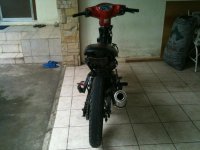
my bike before look.. still checking for any replacements and i mean there's a lot hahahaha, estimated cost of restoration is 7k php just for fairings and 14kphp for the set up, including stroke u/ connecting rod / new piston / big valve / engine bearing also the transmission bearing / clutch lining / new valves & guide w/ inserts/
machine shop fee lol.. its really a lot don't start yet there are more.. one by one this bike will be restored to stock form
 

Attachments

docgabby

Super Veteran
according to the website of haen this is recommended for big displacement engine 180 cc and up. yes i presume it has an ecu that is programmable..
 

Kim G Linagatik

New Member
damn guys i need your help my crankshaft mod is done and head mod's (pictures will be released soon after the bike's back to the strip)

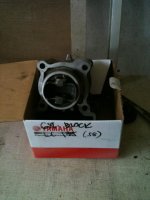
i got stock with my bike, Coz there are no more aftermarket big block for my bike available locally any chance you know sum body that sell those things and any suggestion?

i got 2 crankshafts 1 is for daily usage one is for rainy days ( if u now what i mean ) the first crank is just 7mm stroke up the second is a hush.hush...

-i accidentally overheat my bike on its last run on my current set up, when i opened it up the block is no good anymore cannot be fixed unless re-liner
 

yalomed

Member
good day to everyone, i know this is a bit ot but docgabby mentioned something about fuel injections, uhmmm, how can we install efi systems to our yamaha snipers here in the philippines, and will it drastically improve fuel economy?
 
Top