• If your have CLUB EVENTS/RIDE & would like to announce it here,
    Message traxxas-modifier about it :-)

KNOCKING

traxxas-modifier

Super LOLO
Staff member
stroker said:
traxxas-modifier said:
heres my question to you gurus.

from my bike

1. If conrod is the cause of noise:
will it also have noise in high rpm?

2. this sounds appears "3 DAYS" after i removed 1mm from my 135cc block. will this be the cause of detonation or knocking?
the tick sound is gone in 3000and above rpm...


What worries me is....
my bikes credibility is tarnished due to that sound. HAHAHAHAHAHAHA!!!!
My guess is your knocking noise is your exhaust valve tapping on the piston top; or the piston top slamming against the head; or valve clearance. I can be wrong. But I seldom am. ;p
thanks for info bro.
i will try to open my engine and see if theres scratch mark in piston or valve.


for conrod, theres no noise in high rpm (bike centerstand)
only in idle.
 

charge

Veteran
These days I suffered from a problem. When I off the engine, many times the engine will have one "piak" sound right before the engine is completely turned off. This always happen when I am doing urban riding.

If I am going full throttle or half throttle for 1/2 hour, the engine can be turned off very smoothly, no "mini explotion" sound.

Any gurus can help me to solve this problem?
 

traxxas-modifier

Super LOLO
Staff member
charge said:
These days I suffered from a problem. When I off the engine, many times the engine will have one "piak" sound right before the engine is completely turned off. This always happen when I am doing urban riding.

If I am going full throttle or half throttle for 1/2 hour, the engine can be turned off very smoothly, no "mini explotion" sound.

Any gurus can help me to solve this problem?
thats normal bro.
thats electric starter going back to its normal position.
:)
 

Azzurri

New Member
based what i've seen in How Do They Do It, the knocking sound is caused by higher heptane substance than octane substance in petrol. In R&D division Exxon Mobile, they test extracted sample (petrol) using a small burning chamber, almost like 1 cylinder engine. They called the 'Knocking Test' to measure sound produced. when the heptane is higher than octane, knocking sound also increase. To reduce noise level, they will increase octane in fuel sample.

I think that's why, racers or modifier prefer to use higher octane petrol. When higher octane, fuel consumption more efficient, and its smells nicer.
 

Azzurri

New Member
Adapted from wikipedia

Only high-performance engines typically have higher compression ratios and are therefore more prone to engine knocking, so they require higher octane fuel. A lower-performance engine will not generally perform better with high-octane fuel, since the compression ratio is fixed by the engine design

So, mybe our T135 is already higher-performance engine? Think again. ;D
 

Azzurri

New Member
Research Octane Number (RON). RON is determined by running the fuel in a test engine with a variable compression ratio under controlled conditions, and comparing the results with those for mixtures of iso-octane and n-heptane

As Malaysian we use RON97, but it is possible for a fuel to have a RON greater than 100, because iso-octane is not the most knock-resistant substance available :D
 

Azzurri

New Member
so my conclusion is...to reduce knocking, use high octane fuel.
to see the problem, just ain't using common sense. sometimes need rational mind try to think outside the box :)
 

stroker

Veteran
Paradox said:
so my conclusion is...to reduce knocking, use high octane fuel.
Of course. That's a given.

But there's only limited octaned petrol we can get off the streets. Which is not too high. At RON 97, you're roughly looking at MON 80++. Which is VERY low by race standards.

If you push your compression beyond the accepted range of pump gas, you'll either have to go race gas (at US$8- 12 /litre), reduce compression, or try to find ways n means to make your engine less detonation prone.

$0.02
 

Azzurri

New Member
bro stroker, if i reduce compression ratio, does also reduce bike performance? coz i noticed,

YZF R125 (124.66cc) SOHC
11.2 : 1 Maximum power 11.0 kW (15 PS) @ 9,000 rpm

T135 (134.4cc) SOHC
10.9 : 1 Maximum power 8.45kW (11.33 PS) 8500rpm

then how to increase performance, in the same time reduce compression ratio? how they measure compression ratio using theory and pratical? can u gimme some calculation in engineering math?

u did mention, u build all racing part by urself from scratch.. do u special software? wat the machining portion tolerance spec do u use? Is it japan industrial standard (JIS) or ISO? thanks bro
 

stroker

Veteran
Paradox said:
bro stroker, if i reduce compression ratio, does also reduce bike performance? coz i noticed,

YZF R125 (124.66cc) SOHC
11.2 : 1 Maximum power 11.0 kW (15 PS) @ 9,000 rpm

T135 (134.4cc) SOHC
10.9 : 1 Maximum power 8.45kW (11.33 PS) 8500rpm

then how to increase performance, in the same time reduce compression Iratio? how they measure compression ratio using theory and pratical? can u gimme some calculation in engineering math?

u did mention, u build all racing part by urself from scratch.. do u special software? wat the machining portion tolerance spec do u use? Is it japan industrial standard (JIS) or ISO? thanks bro
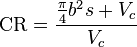
I posted this formula on another thread:
stroker said:

where
b = cylinder bore (diameter)
s = piston stroke length
Vc = volume of the combustion chamber (including head gasket). This is the minimum volume of the space into which the fuel and air is compressed, prior to ignition. Because of the complex shape of this space, it usually is measured directly rather than calculated.
Yes, increasing compression ratio can help increase power. But there's only a limit. Many factors determined this limit. EG: the Volumetric Efficiency (VE in Short), how well your exhaust header is working, cam, valve size, port flow etc etc. Too much.

Simply use any CAD softwares that your CNC machinists support. I calculate, design and specs out the parts including dimensions, machining methodology, tolerances, material, treatment type/ specs etc etc.. The actual CAD and CNC done by the machinists of ours.

ISO, JIS??? Those are workshop practice standards right? I don't follow blindly on all that. The tolerances are set based on case-to-case basis. Especially automotive engineering, all the different parts have very differing requirements in terms of tolerances. Certain parts required closer tolerances. Typically 10-20 Microns. Certain parts, tolerances can be set looser to bring down production time and costs.
 

Azzurri

New Member
sorry bro, im not working for any worksyop. im working for Meiji Flow System Co. Ltd. in R&D division.

Actually, JIS is use in every kind of engineering field. These standard is to maximize production and to improve quality. for our engineering we currently use type D for automotive, H & G for metallurgy.

For the tolerance, we follow standard that they given to us, examples for yamaha parts, there is tolerance spec for hoses, machining portion, bending portion. if dun hav we discuss with them and develop our own tolerance and spec. here im using CAD to draw 3Dpart & convert 3D part to CAM and i finalize it with 5 axis CNC machining.

Theres much i can learn from yours, thanks man. i had to admit u're really a stroker. :)
 

stroker

Veteran
Paradox said:
sorry bro, im not working for any worksyop. im working for Meiji Flow System Co. Ltd. in R&D division.
Cool.

Paradox said:
Actually, JIS is use in every kind of engineering field. These standard is to maximize production and to improve quality. for our engineering we currently use type D for automotive, H & G for metallurgy.
Exactly what Im talking about bro. I don't adhere to all these. Not very applicable for me. The things I build are mainly prototypes/ low quantity parts.

Paradox said:
For the tolerance, we follow standard that they given to us, examples for yamaha parts, there is tolerance spec for hoses, machining portion, bending portion. if dun hav we discuss with them and develop our own tolerance and spec. here im using CAD to draw 3Dpart & convert 3D part to CAM and i finalize it with 5 axis CNC machining.
Exactly again. Like what I've said, all the difference parts we do, have got difference levels of tolerances, precision, uses of metallurgy, heat treatment, PVD or CVD coatings etc. All case-to-case basis. Oh btw, 5-axis CNC is oh-so-cool.

Paradox said:
Theres much i can learn from yours, thanks man. i had to admit u're really a stroker. :)
You sure that's a compliment?? Or is it sacarcism?? :p :p
 

Azzurri

New Member
I've study it and here is a list of possible causes, it may not be complete:

* Timing - if the spark happens too soon, the chamber pressure may rise too high and detonation results.
* Gasoline - if the gasoline burns to quickly (a too-low octane rating), high pressure and detonation are likely.
* Glowing objects - a piece of carbon, a too hot spark plug or other glowing object can start burning too soon. Pressure rises too high and detonation can happen.
* Cranking pressure - Any given combustion chamber has a maximum pressure (before the spark is struck) beyond which detonation is likely.
* High engine tempertures - High chamber temperatures raise cranking pressure and promote detonation.
* Lean jetting - Weak air/fuel mixtures can result in very uneven mixtures within the chamber, uneven burning, pressure spikes and detonation.
 

bandido

Veteran
hi..i manage to search and google it once in my noobie days. Some says the knocking sound is ranging from idling speed for up to 3000rpm. So if u guys revved it up and reaches as much as high as 3000 rpm it will be completely diminished and totally gone..they say it occurs of too much pressure pounding in our block and they also say that the decompression pin got anything to do with this. I guess maybe they were trying to say that at low rpm the total value of vacuum is 90% and at highspeeds it will reduce to 50% to 70%..

Well i guess removing decomp pin will relieve this kind of knock or pinging sound
 

mykl

New Member
Is the sound lessen when you press the clutch lever? if it is maybe sound coming from the clutch housing which more audible during idle.
 

traxxas-modifier

Super LOLO
Staff member
Is the sound lessen when you press the clutch lever? if it is maybe sound coming from the clutch housing which more audible during idle.
yah check if the sound is lessen when you press the clutch lever :)
same issue on my bike on the first few months.
 
Top